Progress Report in Iraq: Overview of Life, War and Reconstruction
Aired July 15, 2005 - 22:00 ET
THIS IS A RUSH TRANSCRIPT. THIS COPY MAY NOT BE IN ITS FINAL FORM AND MAY BE UPDATED.
AARON BROWN, HOST: Good evening again.When a story unfolds over months, then years, the daily reports have a tendency to blur, especially when that story is a war. Most nights, we in television can only show you the latest battles, the block by block victories, grief and terrible images of death. Eighteen children killed in a suicide bombing as they waited for candy, toys from American troops. The pain of those left behind. Inevitably, the episodic updates by their very nature miss the other stories, the ones that don't make the headlines. So we've asked several of our producers and correspondents to help us catch our collective breath, if you will, and deliver a progress report, thought the word "progress" itself is open to debate, on the state of play in Iraq today. Before we tackle the thorny issues of policy and politics, we're going to do something we hardly get a chance to do. And that is take a long look at what life is like for Iraqis, ordinary Iraqi civilians. For various reasons, most of them have to do with staying alive, Western journalists in Iraq don't get out much these days. So, we've asked two of our Arab producers in Baghdad, Kianne Sadeq and Ayman Mohyeldin to spend a week focusing on normal life, as normal as it gets in Iraq, in this time of war.
(BEGIN VIDEOTAPE)
KIANNE SADEQ, CNN PRODUCER (voice-over): What I really wanted to accomplish in this mission of ours, was to kind of have middle-class, Baghdad families, you know, living their life on a daily basis.
AYMAN MOHYELDIN: When we set out that day, we knew what direction we wanted to go to. But we had no idea of what specific place we were going to go to. And we never expected that when we were going to get to a coffee shop, we were going to meet a poet and a doctor and people that were such close friends who have known each other for decades.
(on camera) There was no differences. It seemed like there was no class difference. There was no religious differences. There was no ethnic differences. Everybody in there was there because they loved the atmosphere.
SADEQ (on camera): People try to find pleasure where they can. But in Baghdad, frustration is more than just a passing, emotional state. It's a permanent state of mind.
(voice-over) We went to one of the capital's gas stations, where fuel lines can last hours, and sometimes even days.
UNIDENTIFIED MALE (through translator): There's no future at all. We've given up. We have depression now. There's no water. No electricity. No kerosene. No propane. No benzene. No security. So, what's going on? What have we gotten from this government?
MOHYELDIN: In the two years since the war, my impression has been that Iraqis are living their lives somewhere between. Between freedom and occupation. Between hope and fear. In between destruction and development. And really, in between life and death.
UNIDENTIFIED FEMALE (through translator): It's true we are out to have a good time. But we are scared at the same time. When we walk or we sit here, our hand is on our heart, with fear of a car bomb, or a mortar, God forbid.
MOHYELDIN (voice-over): With all the stuff that's happening in Iraq on a daily basis, I was still surprised to see that people can escape that and go to, you know, the horse races. And enjoy life.
INAN AYAD, JOCKEY (through translator): We have gotten used to the situation. It doesn't really matter. Whatever God wills will happen. We had a horse not too long ago that was racing on the track. And all of a sudden, a gun fight broke out with some insurgents nearby. And a stray bullet hit him in the chest in the middle of the race.
MOHYELDIN: The equestrian club is the only one in Baghdad. And in the aftermath of the war, it was ravaged by looters. We had a chance to meet the president of the club, Mr. Luay Saadi. And he was determined to keep the club open at any cost.
LUAY SAADI, PRESIDENT, THE EQUESTRIAN CLUB: You know, in Iraq now, we don't have many places to go. We don't have things to do, as usual, because of the general situation. So, our aim, our goal, what you call in English, is keeping this race. The horses, you cannot replace it.
MOHYELDIN: His family was incredible. When I met them for the first time, we walked into their house. They were very welcoming.
(on camera) This family embraced us, as if we had known them for years. They didn't hide the fact that there was no water, so that they had to have kettles of water outside their house. And you know, they weren't ashamed of that. They showed us where the generator was. And they showed us, really, how they live. I was surprised to learn that they were actually a mixed family. You know, the father was Sunni. The mother was Shiite. They had a great sense of pride in being a mixed Iraqi family. They don't see the divisions that we hear about on a regular basis. They live in the intersection of two very dangerous neighborhoods. Neighborhoods that we've known to be notorious for, you know, attacks.
MARWA SAADI, DAUGHTER OF LUAY SAADI: There's no safety here. You are living in a war. You feel like it. All the time, you hear -- you hear sounds of guns. Of Hummers. Just sounds make you feel afraid.
MOHYELDIN: Do you regret not taking any of those decisions to leave?
L. SAADI: Some times for a very short little time or moments, if -- that's all. But really, in my inside me, I am happy with what I've got -- with what I've got.
MOHYELDIN: What was neat about them is that they were actually -- I would say, in between being pessimistic and understanding their responsibility as citizens of this country.
TAYEB LUAY SAADI, SON OF LUAY SAADI: No, I won't leave.
SADEQ: Why?
T. SAADI: Because you have to build this country. We should stop saying "we hope, we hope." Because hoping is not going to change this problem and this situation. So, we must try to do something to change it.
MOHYELDIN: The father seemed adamant about what he saw as America's failure in trying to get it right. L. SAADI: As Mr. Rumsfeld said, 135 (sic) soldiers are enough. Let him take his soldiers now. He can't. Let him see how long he will stay. He can't. Let him say that it will keep security. He can't.
MOHYELDIN: Every Iraqi that I spoke to, not a single person came out and said, the situation was good, the situation was on the right track, or that the situation in Iraq was getting better.
SADEQ: I don't think the Iraqis want the Americans to pull out. I think the Iraqis want the Americans to be invisible. I think the Iraqis are afraid to be alone right now. But at the same time, they are hurt to see them around because they don't feel like they're in control of their own country.
(END VIDEOTAPE)
BROWN: We'll have more from our two producers later in the hour. But now, a look at a place that most of you think of as nothing but a blasted and deserted war zone, Falluja, the former insurgent stronghold that was liberated at terrible cost by U.S. and Iraqi forces. Today, residents are picking up pieces, trying to rebuild shattered lives. CNN's Jane Arraf was there during the worst of it. And she returned to Falluja, to see what is working now, and what isn't.
(BEGIN VIDEOTAPE)
JANE ARRAF, CNN CORRESPONDENT (voice-over): If you were seeing the city for the first time, you'd think it was in terrible shape. The people who lived through the battle for Falluja believe these are some of the city's better days. This was the city where foreign fighters and insurgents chose to make a stand, where the sight of dead American contractors, dragged through the streets, was a marker on the road to all-out battle. Several thousand Iraqis are believed to have lost their lives in Falluja. Ten percent of U.S. forces killed in Iraq, more than 170 Marines, soldiers and sailors, have died here. We were with U.S. forces in November, as they rolled into neighborhoods and raided buildings we'd been warned had been rigged by insurgents to explode. Fighting continued for days, until there seemed to be more dead insurgents than live civilians. Coming back with the Marines, the most dangerous part is the highway. On what looks like an empty road, insurgents have found increasingly sophisticated ways to rig improvised bombs. In the city, entire blocks were turned into rubble. With the first compensation from the Iraqi government, people have started rebuilding their homes. Each brick, a sign of optimism. Some of the worst fighting was in the north of Falluja. I wasn't sure what we'd find when we went back to the Shorada (ph) neighborhood, to an abandoned house we knew well in November.
(on camera) We stayed in this house with U.S. soldiers we were embedded with during the battle. The house was empty. The neighborhood was entirely deserted. But now, this family has moved back to renovate it. And they say most of their neighbors have moved back, as well.
(voice-over) This was the neighborhood of Afah Stawasi's (ph) house. The family received about $1,400 in compensation, enough to renovate the first floor but not enough to replace the furniture. Senara (ph) has henna on her hands, a traditional form of celebration, because she says she's so happy to be home again. She says her heart weeps when she remembers what it was like to flee the city and live like refugees in the countryside. Her husband has taught his children to say, "my friend" to the Marines. It's the Iraqi forces he's wary of. This Marine officer asks him to be patient.
MAJOR CHRIS PHELPS, U.S. MARINE CORPS: Your government made the decision to come into Falluja and get rid of the terrorists. They've also made the decision for hundreds of millions of dollars to come into Falluja to make it better. It's not perfect. It's not perfect. But it's getting better.
ARRAF: With half the population of Falluja believed to have returned, the military is trying to prevent insurgents from creeping back into the city that's seen so much devastation.
(on camera) The fighting that we saw here was some of the worst for a city since the Vietnam War. There's been so much destruction, so much bloodshed that Falluja has become a symbol of the battle for Iraq. And whether the city recovers is seen as a test for the whole country.
(voice-over) It's a test of whether a fiercely Sunni tribal city can find a place in a country now dominated by Shias and Kurds. A test of whether those in power can finally figure out who to trust. On Falluja's most-wanted list, there's a picture missing. Isah (ph), previously considered an insurgent leader, who's now a member of the city council.
UNIDENTIFIED MALE: We've actually had one of them come through. But he's determined to now be a good guy, helping us out.
ARRAF: If there is a future here, it seems to be in men like Army General Mahdi Sabiya Kassam (ph), here at this meeting of the new city council, tribal leaders and the Marines. He told the meeting, "Of General Mahdi (ph) is killed, there will be General Salah (ph) to replace him. If Salah (ph) has gone, there's Kareem (ph). And another and another and another." The future may also rely on men like council member Abbas Ali Hussein (ph), who says Sunnis won't repeat the mistake of boycotting the elections. And on Iraqi Lieutenant Sabbah Ismail (ph), so dedicated to his job as commander, the Marines say, he doesn't go home. There's progress here, but it's precarious. There are only 90 police in this city. In a few months, there will be 1,200. The people here want policemen from Falluja, not those from the north and south. There are about 800 Iraqi soldiers, but residents here don't trust them. Almost everyone we meet complains they're too aggressive, that they shoot wildly in the air, that they beat up civilians. Even the schoolteacher complains about them. "They're occupying schools Falluja needs," she says. People here take education very seriously. While students in the rest of the country are on summer vacation, here, they're making up for time lost during the fighting. Students are sitting for sixth grade exams in this renovated building. But classes are held in tents, with no electricity, 90 students to one teacher. Amid (ph) didn't get to go to school. He tells me he had to quit to work. He'd like the soldiers to fix his bike. A broken bike is one thing they can fix. A broken city will take the will of an entire country. Jane Arraf, CNN, Falluja.
(END VIDEOTAPE)
BROWN: A lot more to come tonight as we continue our progress report on the war in Iraq.
(BEGIN VIDEOTAPE)
LAITH KUBBA, IRAQI GOVERNMENT SPOKESMAN: Democracy in its initial phases is messy.
CONDOLEEZZA RICE, SECRETARY OF STATE: This political process is moving forward. BROWN (voice-over): That said, how to measure success. And how to decide if and when to leave?
LESLIE GELB, PRESIDENT EMERITUS, COUNCIL ON FOREIGN RELATIONS: I think we'll be able to tell when there's victory or when we're on the way to victory, by one simple measure.
BROWN: Later, the first rough draft of history.
UNIDENTIFIED MALE: The memory of Saddam is a strong incentive to push in the direction they've been going for the last two years. BROWN: Our conversation with one of the people writing it. Then, life in Iraq, the good, the bad and the stunning. One award-winning still photo at a time. Because this is NEWSNIGHT.
(END VIDEOTAPE)
ERICA HILL, HEADLINE NEWS: I'm Erica Hill with the headlines, starting with new developments in the London bombing investigation. News being made from Pakistan to Egypt, to Great Britain. Reporting for us tonight, CNN's Nic Robertson.
(BEGIN VIDEOTAPE)
NIC ROBERTSON, CNN CORRESPONDENT (voice-over): Police forensic teams seized computers from the Hamara Islamic Community Center, close to where at least two of the suspected bombers lived. It is here that CNN has learned of the first reported sighting of suspected bombers, Hasib Hussain, Shahzad Tanweer, and Mohammed Sadique Khan together. A local resident, who didn't want to be identified, told me how the three men repeatedly used the Hamara Community Center over recent months.
UNIDENTIFIED MALE: They always used to wait for all three guys to meet before they get inside the Hamara youth association point.
ROBERTSON (on camera): They would go in and shut the door and put a sign...
UNIDENTIFIED MALE: Yes. A sign that they are going for lunch.
ROBERTSON: But really they were inside?
UNIDENTIFIED MALE: They were inside. And that's what they've always been doing.
ROBERTSON: Exactly what brought Hussain, Tanweer and Khan together is still central to the police investigation. Equally important, who financed them? And what motivated them? And how do they connect to the other pieces of this puzzle, both here in Leeds and elsewhere.
(voice-over) In Cairo, Egyptian biochemist Magdy el-Nashar was taken into custody Thursday night at Cairo airport. He is believed to be linked to this residence in Leeds, where police discovered homemade TATP explosives, the same explosive used by Richard Reid, the shoe bomber. El-Nashar was last seen here two weeks ago, at Leeds University, where he obtained a Ph.D. in biochemistry in May. Police refused to comment on his arrest and how he may be linked to the case. Significantly, the police are not backing off from their initial suggestion al Qaeda was somehow involved in the attacks.
SIR IAN BLAIR, METROPOLITAN POLICE COMMISSIONER: What we expect to find at some stage, is that there is a clear al Qaeda link, a clear al Qaeda approach.
ROBERTSON: from Pakistan, which is becoming another focal point for investigators, one source tells CNN, Tanweer attended a religious school, with links to radical Islamists, late last year. It is likely, though, it's here in Leeds that many of the key discoveries, like who knew what, when, where and how, will be made. But it looks like that will take quite some time. Nic Robertson, CNN, Leeds.
(END VIDEOTAPE)
HILL: An especially bloody day in Iraq. Eight car bombs going off in and around Baghdad alone. This as lawmakers trying out to hammer out a constitution. Now, according to American commanders, as many as 30 people died in the attacks. Two Marines were killed elsewhere.A lawyer close to the investigation says Karl Rove, the president's top political adviser, spoke to Robert Novak just days before the columnist and CNN contributor wrote a column outing Valerie Plame as a CIA agent. They say Novak initiated the call and reportedly identified Ms. Plame, to which Mr. Rove replied, "I heard that, too," apparently confirming the story. Hurricane Emily weakening a bit today then picked back up and is once again a Category 3 storm. Forecasters say it could approach Texas or northern Mexico by next Tuesday. And that's a look at the headlines. Back now to NEWSNIGHT's special coverage, Iraq.
(COMMERCIAL BREAK)
BROWN: In the first part of our look at everyday Baghdad, one of our producers said that, to Iraqis, frustration is a permanent state of mind. Perhaps.But the human animal being what it is, it is not all that surprising to find that, even there, there are those who have enough faith, enough optimism to celebrate what they have. We continue our reporting by CNN producers Ayman Mohyeldin and Kianne Sadeq. A look inside everyday life in Baghdad.
(BEGIN VIDEOTAPE)
SADEQ (voice-over): Just outside this tunnel of blast walls, we reached a Baghdad heaven.
UNIDENTIFIED FEMALE: Hello. SADEQ: The Alwiyah (ph) club is a recreational club in Baghdad. They just go to this club on a daily basis to just have a good time. We walked into a wedding and asked them to let us shoot their wedding. Oftentimes, you know, women would be nervous about outsiders filming their wedding. But in this wedding, it was wide-open. People were just being themselves. And when we spoke to the mother, she said to me, this is something they needed to do, for their children.
SANAA BAHRI, BRIDE'S MOTHER (through translator): We want the coming days to be happiness and joy. Enough war. Enough blood. Enough pain. We're tired. We're really tired. So, we bring pleasure to our children by these joyous events so that they look forward to the future with hope. SADEQ: The father of the bride was an ex-captain in the Iraqi navy. My first impression was what an optimistic family. Why are they optimistic? How are they so optimistic in this time? It was only when I sat with him, one on one, I got the sense that he was upset.
CAPTAIN ESSAM AL-HUSSAINI, BRIDE'S FATHER: I don't know what's happening. I mean, is it true that the Americans, they didn't plan it well? Or did they misunderstand what the Iraqis behavior? People are afraid. I'm afraid for my son to go to school. I am afraid for my eldest son, a doctor, to travel to his hospital. I cannot send my daughter to the university. They had Bush and the administration, and we were very, very happy when he said that Iraq will be -- set an example in the Middle East. It will be one of the best countries in the Middle East. We appreciate his words. But I don't know. I mean, is it true that the great America cannot fulfill their promises?
SADEQ (on camera): We walked into this apartment, in one of Baghdad's safer neighborhoods. Not too safe. And there was this small apartment, which this group of filmmakers had made for themselves into their own paradise.
MOHYELDIN: These filmmakers, they welcomed Americans with open arms when they first came. But then, they saw them as occupiers, taking control of their country and their city. But they also realized that they had a chance and the freedom to express themselves in a way that they never had before the Americans came.
AMMAR SAAD, FILMMAKER (through translator): now, I can make any film I want. I can make films about communism, Islam, anything.
SADEQ: So here were all these filmmakers who were able to take Baghdad with all the destruction in it, and make it into this canvas for their artwork that looks so beautiful. Like this film they made about the dangers of being a journalist in Baghdad.
SALMAN ADEL, FILMMAKER: You have so many relatives killed, siblings, relatives, brothers, sisters, whatever, in every single house. You have to understand that life is difficult. And the difficulty of living is the -- is the motivator of ideas.
SAAD (through translator): I say that there is chaos, destruction, devastation, killing, terrorism, and everything. But on the other hand, there is life.
SADEQ: To me, the optimism of these artists captured something essential about Iraqis. People have seen beautiful Baghdad turn into a war zone. They wanted to see Iraq be the beautiful Iraq that they love.
(END VIDEOTAPE)
BROWN: Just ahead on this special edition of NEWSNIGHT, the United States went to war in Iraq because of weapons of mass destruction which did not exist. The country has stayed to ensure democracy. Does that exist? Will it? Will it ever? A break first. Around the world, this is NEWSNIGHT.
(COMMERCIAL BREAK)
BROWN: Political process and Iraq, words we doubt were often spoken in the same sentence in the years of Saddam Hussein. Yet, long after Saddam's removal from power, the struggle for democracy in Iraq remains just that. A struggle. CNN's chief national correspondent, John King, reports.
(BEGIN VIDEOTAPE)
JOHN KING, CNN CORRESPONDENT (voice-over): It was a powerful moment. Yet also, a sober lesson. No matter how historic, one election does not a democracy make. The challenges on Iraq's path from dictatorship to democracy, at times, seemed too many to count. The most urgent, all too obvious.
KUBBA: Democracy in its initial phases is messy. It's not an ordinary transition under normal circumstances.
UNIDENTIFIED MALE: The fact that the insurgents can knock out generators, the fact that they can knock out oil pipelines, the fact that there are organized crime rings that disrupt the flow of goods and people along Iraq's roads, it makes it hard to rebuild your lives exactly the way that Iraqis want to.
KING: And hard to build trust in a fledgling new government, all the more so, because of what many Iraqis view as an unwelcome military occupation. Not to mention history.
GELB: It's going to be hard without a democratic experience to be a democracy. Creating democracy in Iraq is going to be far harder than it was for us here in the United States. And it was hard for us. We forget that.
BUSH: Rebuilding a country after three decades of tyranny is hard. But progress is being made.
KING: And yet, from the white house perspective, so far, so good.
CONDOLEEZZA RICE, SECRETARY OF STATE: This political process is moving forward. And at the end of the year, you will have elections for a new government in Iraq. And that will create a new set of political circumstances, when they have a permanent government.
KING: But meeting deadlines, like holding an election, and even writing a constitution, doesn't necessarily prove democracy is taking root.
KENNETH POLLACK, BROOKINGS INSTITUTE: I think it's a mistake to keep begging our hopes to these major events. Events like the election are important, psychological milestones. But they're not necessarily major factors in determining whether or not Iraqi democracy can succeed.
KING: Trust is one missing ingredient. In Saddam Hussein's Iraq, Sunnis held sway, despite their minority status in Iraq's population. Now, many Sunnis say the Shia and Kurds are bent on retribution.
TARIQ AL-HASHIMI, IRAQI ISLAMIC PARTY: I think from the beginning, the Sunni community has been marginalized. And this -- the current government, unfortunately, in fact, is deep in this marginalization.Reporter: But government spokesman Lait Kuba (ph) sees proof negotiations to bring Sunnis into the political fold are making progress.
UNIDENTIFIED MALE: The insurgency now is attacking Sunni neighborhoods, in the same way it attacks Shia neighborhoods. They are attacking those who try to lead Sunnis into the political process. That has exposed the insurgency as an insurgency against democracy, against the Iraqi people.
KING: Mistrust, even hatred in some cases, is both an obstacle to democracy, and a motivating force.
UNIDENTIFIED MALE: When you have groups that are determined to stir up violence, to try to create more breathing space, space for the movement, it becomes critical that the political process continues, otherwise the country will end up in civil war.
KING: Saddam's iron fist and those festering ethnic and tribal tensions, loom large in the new debate of what a new Iraq should look like. Who big of a role Islam should play. And just how strong the central government should be.
GELB: I think in order to keep Iraq together, as one country, the irony is, you're going to have to give virtual autonomy to each of the three major groups, to run its own affairs. That way, they'll have confidence that when the laws are to be made in the future, they'll essentially be making the laws for themselves.
UNIDENTIFIED MALE: Iraq needs a strong state. The only thing that will defeat the insurgency in this tough neighborhood in Iraq, is to have a strong state.
KING: Progress does not come without a price. Success in writing the new constitution would bring new pressures, including stronger calls for American troops to go home.
AL-HASHIMI: Time comes, in fact, that those who assist us in taking back our liberty, they should leave our country as soon as possible.
KING: But the White House sees the troop commitment stretching well into next year and beyond, because of the security problems and because it knows even a second election in post-Saddam Iraq will not be a final verdict in democracy.
POLLACK: There certainly are Islamists who would like to be voted into office. And like Hitler, have the democracy evaporate with that one vote.
GELB: I think we'll be able to tell when there's victory or when we're on the way to victory, by one, simple measure -- that is, whether, particularly in the center of Iraq, people can come out on the streets, and begin to lead normal lives.
BROWN: Still to come tonight, a soldier's journey from the dusty streets of Falluja, to his return home. And the man who stayed with him all the way. From New York, this is a special edition of NEWSNIGHT.
(COMMERCIAL BREAK)
BROWN: A number of journalists have died covering the war in Iraq. One of them Michael Kelly, the editor of "The Atlantic Monthly." there's an award given to journalists in Kelly's memory. And tonight's NEWSNIGHT conversation is with one of the year's finalists. The judges had this to say. Twenty years from now, students looking for a definitive account to the troubled aftermath of the U.S. invasion of Iraq will no less turn to George Packer's deep reporting, 20,000-word piece in "The New Yorker." Lucky for us we don't have to wait 20 years. Nice to see you.
GEORGE PACKER, "NEW YORKER": Nice to be here.
BROWN: It seems to me, pretty clear that Americans are less optimistic about the state of play in Iraq, than they were a year ago. Do you think Iraqis are less optimistic about the state of play than they were a year ago?
PACKER: Polls show there's a kind of constant level of optimism about the medium to long-term future among Iraqis. And I think that's because people cannot afford to give up on their own future. The polls about what Americans think show that Americans have less and less confidence that the war in Iraq are going the right direction. I think Iraqis are worried that Americans are going to lose faith in this before they do.
BROWN: Let me come back to that. Is there -- are there reasons why, beyond -- beyond blind faith or you can't afford to think otherwise. Are there substantive reasons why Iraqis looking at the situation today would say, you know what, it ain't perfect. And it's not even good. But it's better.
PACKER: I think the memory of Saddam is a strong incentive to push in the direction they've been going for the last two years. They have not forgotten what it was like to live for 35 years under that tyranny.
BROWN: Sunnis?
PACKER: Sunnis did not love Saddam. Sunnis have begun to embrace, sort of the idea of Saddam as a nationalist figure, against the occupation. And against sort of Shiite surge that's happened in the last two years. But Saddam is not widely loved around Iraq, by more than the sort of hard core who made up his security and intelligence forces.
BROWN: Do you think it's possible to take the disparate groups in Iraq, the Kurds, the Sunnis and the Shias and meld them into a governing body that takes care of each other, not just themselves?
PACEKER: That is the essential question. I was talking to an Iraqi friend today who said, George, there is no Iraqi government to which Iraqis are giving their loyalty. They are giving loyalty to their militia. To their ayatollah. To their party. But not to the country. But one of the legacies of Saddam is he really did destroy the idea of citizenship in Iraq. Barham Sala (pg), the deputy prime minister said to me there is no idea of being an Iraqi in this country. That's something we have to build. And that is really one of the hardest things to create out of the chaos of the last couple of years.
BROWN: Do you see any signs that the people who need to get that, get that? And I'm not sure how you'd begin that process. But that process is actually happening?
PACKER: Well, here's one slightly-hopeful sign. And I am not by any means sanguine about this. But Sunnis have begun to realize that it was a mistake to sit out the elections of January, whether they did it out of fear or out of boycott, Sunnis voted in very small numbers. And quietly, they began to admit pretty quickly after the elections that it was a mistake. And more and more of them seem to be saying that we need to be sure to be able to participate in the next round of elections. And so, let's start organizing now. To me, that's the idea of being part of a larger body than just the Sunnis.
BROWN: The other side of that is that Shias then have to say that's a good thing.
PACKER: And I don't know whether host the Shia do feel that way. The government has been more sectarian than I would like to have seen. On the other hand, they have opened up the constitutional committee that's preparing the document that will have to be ratified by the country to more and more Sunnis, who didn't actually have a place at the table because they didn't participate in the election. That, too, is a sign that there are Shia that need to recognize they can't do this as a one-sided process.
BROWN: Just a quick, final question -- do you think a year from now, when we sit down to talk about this, things will be better in Iraq for Iraqis than they are today?
PACKER: I think that depends on whether Americans are willing to stick with it. And that's my biggest worry. That both the public and the government in response to the public are going to decide, it's good enough. We can leave, when, in fact, it really isn't good enough. The Iraqis will deserve better.
BROWN: Good to see you again.
PACKER: Thanks for having me.
BROWN: Thank you. Still to come tonight in our progress report on Iraq -- American soldiers in the country, seen through the lens of a photographer who committed the ultimate journalistic sin. He got emotionally involved. We'll take a break. This is a special edition of NEWSNIGHT.
(COMMERCIAL BREAK)
ERICA HILL, CNNHN ANCHOR: Good evening, again, everyone. I'm Erica Hill in New York. We'll go back to NEWSNIGHT in a moment. But first, let's get caught up in the headlines.Starting with a second day of air strikes in Gaza. Israeli forces targeting Hamas weapons laboratories in Gaza City and Khan Younis. Air strikes, retaliation for Palestinian rocket attacks, left seven militants dead.On now to San Francisco where the men in the middle of the steroid and sports scandal entered guilty pleas. Victor Conte, founder of BALCO, coughing to conspiracy and money laundering charges while Greg Anderson, personal trainer to Barry Bonds, pleading guilty to the same. And company vice president James Valenti pleading guilty conspiracy to distribute steroids.Finally, Pottermania is here. "Harry Potter and the Half-Blood Prince" going on sale tonight in London and around the world. Our prediction -- it will do okay.Well, fewer than half a dozen people lived through the Washington, DC crash of Air Florida flight 90 in 1982. As part of CNN's anniversary series, then and now, we look back at one survivor. Kelly Duncan Moore and where she is today.
(BEGIN VIDEOTAPE)
BROWN (voice-over): Air Florida flight 90 took off from Washington's National Airport on the 13th of January, 1982, bound for Tampa, Florida. But it only made it as far as the 14th Street Bridge. Kelly Duncan Moore was a 22-year-old flight attendant, plucked from the frigid waters of the Potomac, one of just five survivors of the crash. She doesn't remember much. Only coming to the surface and clinging to the wreckage of the plane.
KELLY DUNCAN MOORE, CRASH SURVIVOR: The most significant memories of the crash I have are the moments before the crash. I remember looking and seeing a man turn around and look at me. And he looked afraid.
BROWN: Moore is now in her 40s. And says the experiences, as you would imagine, changed her life, and her priorities.
MOORE: I started praying. I never prayed. I started asking God, why am I here and what am I supposed to do now.
BROWN: She has since devoted her life to God and to children, working as a teacher and a youth minister at a Baptist church in Miami. She's married with three teenage children.
MOORE: I feel like every day has been a blessing. I have a wonderful life. It sounds crazy to say it. But that accident changed my life for good. God used a bad thing to turn my life around.
(COMMERCIAL BREAK)
BROWN: As a rule, news photographers try to remain dispassionate about their subjects. But as we know, sometimes rules get broken. And what photographer Max Becherer learned, that one of the marines he photographed died, he was moved to tell the rest of the story.
(BEGIN VIDEOTAPE)
MAX BECHERER, "TIME" PHOTOGRAPHER: In October of 2004, I was in Iraq, with "Time" magazine. And we were embedded in Ramadi. And from Ramadi, the 1st marine division asked us to come to Falluja. From then I spent about two months in Fallula, to do patrols outside Falluja:There was one squad I hung out with for a bit. The squad leader was Corporal Eric Shelby and he had two team leaders in the squad. Lance Corporal Gregory Rund and Lance Corporal Jeremy Miller.Gregory Rund is a kind of person you would meet. In the States, he would be like a class clown. Three or four days into the battle of Falluja, he's leading his team.I guess we fought for about a week. That was the end of November. I thought, well, I might go home for Christmas. A few days later, December 11th. And I was in Times Square. And I'd heard that someone had been killed in Falluja from the unit. And one of the mothers had e-mailed me and told me it was Greg. I was trying to take in that I was not going to see him again.And there's a news ticker that says, one marine killed Anbar province. And I realized how cold those words are. You could read that and not know anything about that. One person killed. No, that's - Lance Corporal Gregory Rund was killed, in Anbar Province in Falluja. And when I showed up at the funeral, I wasn't sure I was going to see in there - how welcome I would be. And I stepped in and Jane, his mother, saw me. And she just stepped right up to me and gave the most -- just kind of soul-shaking hug. I was the last person at the funeral that had seen him alive. So, that meant that much more to her.When you're in Iraq, you see a lot of violence. And you can't deal with it all right at that moment. You take it in. When you go home, at some point, you try to deal with it. And so, when I went back to the unit, I asked Jeremy if I could go back home with them, to tell their story. Jeremy Miller had still had a few belongings of Greg's. And they had spoke previously about Falluja that there was a few belongings. And if something happens to me, take these.Jane (ph) hasd said she was going to meet them at Camp Pendleton when we got home. We got home pretty much the middle of the night. And immediately, Bobby and Debbi (ph), Jeremy's parents came to greet him. And his girlfriend Celeste was there and they were hugging him, holding him. As he was doing this, he was looking in the back of the room, and Mark and Jane, Greg's parents were standing there. A strange, kind of awkward scenario. Because it could be either one's family that was switched in their place in life.Then, Jane came up, Jeremy greeted them. You could tell he didn't know what to think exactly. You come out of the scenario and just experience it. And maybe you're prepared for this to happen. But I don't think they're prepared to come home and deal with it. I don't think they're prepared to come home and look at the mother of their best friend that, you know, was left behind there.Jeremy was able to come home. And while he'd been away, Celeste was making intense plans for a wedding. And so, he went back to Deer Park, Texas. They had a very nice wedding ceremony set up outside. Just outside his hometown. On April 30th, marines held a memorial for the fallen. And Greg was one of those.Members of his unit were on leave. But on Jane Rund's request, they came to attend. It was an opportunity for marines to come and show their compassion for them. And hopefully share some stories.The marines came early for this event. And they visited Jane and Greg's family. They went together and they visited Greg's gravesite. A lot of marines kicked around and silently looked at the gravesite of their friend. And I think at that point, you just realize that they're trying to grapple with the fact that it would be them. Jeremy talked about, he hates going to these things because it brings it up again and again. And you want to get it out of your mind. You want to continue. And when that ceremony was over, I think it was it for him. He saw the gravesite. And he had a place to put Greg's memory.
(END VIDEOTAPE)
BROWN: We'll have closing thoughts in just a moment.
(COMMERCIAL BREAK)
BROWN: As we wrap up our special edition of NEWSNIGHT, "A Report on Iraq," Know that the story is continuing. We hope you'll watch the rest on a CNN PRESENTS special report this Sunday, 8:00 Eastern Time. Until then, have a good weekend. And good night for all of us.
TO ORDER A VIDEO OF THIS TRANSCRIPT, PLEASE CALL 800-CNN-NEWS OR USE OUR SECURE ONLINE ORDER FORM LOCATED AT www.fdch.com
Saturday, July 16, 2005
The capacity of Ms. von Zwieten to hate extends to ethnicity beside Jew.
So to my sisters and brothers of the Muslim faith I make this entry.
I just can't believe Aaron Brown lends legitimacy to this type of journalism. Biased to say the least. I shake my head in astounding reality everytime I hear it.
As the scandal of the current Oval Office plays out with aids of all Executive Branch Members having access to sensitive information while using it for political pundancy, this trash was displayed Friday night. I don't know what purpose it serves other than propaganda because it was all edited and taylored as an infomercial to promote the war.
If this country cannot count on an honest and exempliary press then we need not be involved in any aggression such as this anywhere.
In Vietnam, the truth regarding our troops there ended it because we could count on the press to bring the sad reality of their deaths as well the sad reality of our losing the war back home.
In the reporting of Iraq, the news media, especially Cable Network News which acts as political pundits at any cost to our society through bad government, there is nothing trustworthy anymore as they seek to entertain imaginations rather than chronicalize the fact that Iraqis still cling to their own social structure through religion and little if any value a centralized government. What Iraqis do value is for their lives to proceed without death being upon them every minute of every day. That hasn't happened there yet. And as long as this type of irresponsible journalism continues in the USA I believe the conflict in Iraq will continue without an end.
The 'idea' of an Iraq Progress Report. By whom's definition is there progress in Iraq?
The first thing one has to realize is that this program was sponsored at the Ten O'Clock hour by Big Oil and Big Beef with minimally one oil commercial every fifteen minutes.
Additionally the only 'introduction' to religion minding you this is about Iraq was Baptist in a 'Then and Now Segment' regarding Kelly Duncan Moore a crash survivor from Air Florida Crash in 1982 who realized she was spared death to live a life as God's servant. The segment neglected to ask Ms. Moore whether or not she ever flew again.
http://www.christianitytoday.com/tc/2000/001/6.48 [...]
There was one statement that screamed sanity the entire 59 minutes by a well spoken Iraqi man (Did you get that? A WELL SPOKEN Iraq man that spoke in English so I could understand. I am confident the number of Iraqis who speak English is rare. REMEMBER THAT AS i WEED THROUGH THIS MESS.) and that was stated : "Those that returned our liberties need to leave now."
Those words were then trampled by John King who went on NOT about the priorities of the Iraqis but about the Bush White House.
There was also the most ridiculous statement by an Iraqi man who spoke in English but not clearly more with an accent (Mind you this is a country that has never known democracy, has no reference point to democracy. So to ask Iraqis how things are going in relation to democracy is a hideous question.) and he stated (I paraphrase.) : 'Democracy is always worse in the beginning because there is so much freedom people cannot provide lawful behavior. There is no real good transition to democracy no matter how it comes.'
I refer to countries like Brazil that transitioned just fine without killing their own citizens in civil war.
Then there is the most hideous military statement from a very tall GI carrying a very big gun speaking to an Iraqi man nearly a full one third less in height. The soldier is putting his hand on this Iraqi man's shoulder as if to not let him leave and states in perfect English without any accent, "Your government wanted up to come into Fallujah to kill the terrorist but you also have to realize your government has several hundred million dollars to help you rebuild."
CNN called that segment 'The Battle FOR (not OF) Fallujah.' Fallujah has always been where the Sunnis lived. Now, thanks to the USA military Fallujah lays in rubbles except for people starting to rebuild grateful they still can go back to rebuild their destroyed city.
That was another incredible statement by an Iraqi woman who was forced to be a refugee due to the 'flattening' of Fallujah. She returned to her home and celebrated with Henna on her hands at the joy of returning home. The entire segment came across as a return to her home after a refugee status due to Saddam. It wasn't. It was a return to her home as she fled to refugee status from the invading Americans.
Additionally, his segment was discernable because an interpretation of the Iraqi language. We don't know what the woman was actually saying except she did have henna on her hands. Women who wear henna on their skin are usually getting married. It is a common practice even in places like Inida. It is sort of like getting a hair style before you walk down the aisle.
All during the early minutes of this 59 minute long Propaganda News Piece I looked at the photography of Iraq. Everything is in rumble. It looked like Beirut did. That rubble is due to the USA invasion. That rubble did not exist before the war. These were communities with life as reasonable as it comes under scrutiny of The United Nations Security Council Inspectors.
The entire concept of this news item was completely bizarre. The CNN network was 'creating' a version of Iraq without Iraqi consent. Mind you, I said CONSENT, and not participation. There were Iraqis that could speak English and contributed to the program but the CONTEXT of the show was without their consent.
To address 'consent' of the Iraqi people to this news item by CNN as a Progress Report; it was plainly clear with every Iraqi person that spoke they were mad as hell. There is no getting around it. Every person who spoke in English never had a good word to say about the USA. They were all profoundly upset with Bush and his huge statements about making Iraq the best country in the Middle East. A country to envy, an example of Democracy.
They were empty words to these people who live in a moment to moment fear for their own lives.
To prove the USE of these words as spoken by the Iraqis then taken out of context by CNN was the word frustration. In the early minutes of the program the word was used by Iraqis to exhibit their feelings about their lives since occupation by the USA. There was the overriding question by most of how long this insanity would go on and when reflecting on Don Rumsfeld replies to same question he could not answer that question.
So, too frustration.
At the top of the program that was a given by the Iraqi people. By 10:21 PM Aaron Brown stated, "To the Iraqis frustration is a permanent state of mind. PERHAPS."
PERHAPS. That single word statement is a departure from any statement by any Iraqi. A complete departure from their intended meaning. THAT is what I call TAKING CONSENT away from their participation. Removing the meaning of their statements to a different context. Everything from 10:21 PM on was bogus and had no true meaning. To say it was unethical is to realize as a result of that act people will die as the truth of Iraq eludes this country through manufacturered images as created here.
What followed were 'elements' of Iraqi life that takes place in secured areas of the city. A "Horse Club" that found it's way to survival past the invasion even though all the original RACE HORSES were gone after the invasion. Another element of Iraqi society is a Recreational Club where there is a swimming pool and people come everyday to escape their reality otherwise. There are film makers who have managed to seclude themselves in a small apartment that is a little bit of heaven to enjoy their friendship and inspire each other to makes films. One film maker made a stark reality film of the dangers journalists face in Baghdad. There were scenes of a wedding in Iraq. Very fancy wedding.
Elements of Iraq but NOT THE NORM of Iraq. These elements were among people who could afford them. They were not the general society.
When men at all these 'element' events were engaged in conversation regarding the 'state of play' in Iraq the response was always the same. They found no one oppressed them from doing what they wanted but they all lived in fear day to day, moment to moment for their lives. The man who gave his daughter the wedding was a former Captain in Saddam's Army, therefore logically a Sunni, and he was furious complaining how none of his children regardless of age were safe enough to attend their schools without fear of death.
There were pictures of Iraqi children in refurbished school rooms with 90 children per teacher but there was no guarantee to their safety and only yesterday children were killed when lured away with candy. So, hence this Sunni father was absolutely correct, there was no safe place for his children to attend school.
Every Iraqi had the same reply to the occupation. They hated it.
These 'elements' of life as shown by CNN to be huge events of Iraqi society never before seen to the American public and a cause to rejoice was simply life in the face of moment to moment threats and real threats of death. I mean won't you? If life was as tenuous here as there to the degree it is in Iraq wouldn't you live life to the fullest knowing it might be your last moment?
You darn right you would.
I want to regress to the beginning of this Racist Work to realize the degree the poor caucasian executives at CNN had to settle in order to get those pictures to exploit.
Right in the opening minutes of the program were the words of Aaron Brown regarding the dangers that awaited outside the hotels of Western Journalists. He stated due to those dangers the Western Journalists could never go to the city of Baghdad to get the film they were looking for, so in order to do this piece they had to call on Iraqi journalists to find events worthy of the theme they were perscribed and then do all the filming and interviewing.
Got that?
The Iraqi journalists were NOT the first choice of the CNN executives.
That level of racism came from the mouth of Aaron Brown in the very first minutes of that 59 minutes program. Scripted perhaps, but, spoken just the same by someone I had admired until recent. I cannot in good conscience consent to this degree of hatred as he does.
Now, I ask you, am I going to consider any of this context seriously in a way that is unbiased?
I kept an open mind but as the minutes rolled out it was all too obvious the level of hatred of the Iraqi people for not being good and 'ordered up' subjects. The word 'frustration' again came to mind after the 10:21 PM moment but more of the 'CNN Editors.'
At 10:28 PM after the second oil company commercial is when the programming turned to politics and Bush's face was everywhere discussing the initiative of these huge events such as the Janaury vote. The point was made by an Iraqi official that although the HUGE events noted as success by Bush were "Power Moments" but were also moment that were wrong to recognize as a statement of progress.
Can anyone disagree with that?
The reality of this piece of bigotry ended with that segment at abotu the 10:33 PM moment. From then on it was propaganda to justify the occupation of our military.
The justification came by scapegoating the Sunnis. It was stated the Sunnis were marginalized with mistrust and fear as the motivating force. What this message did not relay was the fact the mistrust and fear did not come from the other ethnicities so much as the American Coalition. If one recalls the Sunnis were at roll call in the new centralized government right up to the point where Fallujah was leveled by the USA military.
I remind at this point Fallujah was a High Value Target 'of this man's Army' because all of the Islamic World was worshipping and praying for the people in Fallujah to stand strong and resist the occupation. So, to realize there was no standing down by the USA to make a point to not only the Iraqis but the entire Islamic world that George Walker Bush was boss!!!
Now, to say the Shi'ites and Kurds were the problem of the Sunnis estrangement is projecting blame on the wrong entity and creating an argument for an understanding of a guaranteed civil war between all these ethnicities and the USA must stay to see all this through.
Right, Sure.
Of course there is no nobler cause except perhaps protecting the USA interest of Bechtel and Halliburton.
The entire REMAINS of the program was waving the American Flag with talking heads expounding the virtue of all we, the Americans have done and then there was a film tribute to a dead American soldier to round out the patriotic nature we all need to properly put this into humble perspective and continue to worship Bush for his valor on all fronts in Iraq.
The 59 minutes ended with three miinutes of commercials including a final Kerr McGee oil commercial.
To say I wasn't impressed is an understatement. "I am however hoping the film makers find a way to get their films reproduced to make it in time to Michael Moores Film Festival this month."
I just can't believe Aaron Brown lends legitimacy to this type of journalism. Biased to say the least. I shake my head in astounding reality everytime I hear it.
As the scandal of the current Oval Office plays out with aids of all Executive Branch Members having access to sensitive information while using it for political pundancy, this trash was displayed Friday night. I don't know what purpose it serves other than propaganda because it was all edited and taylored as an infomercial to promote the war.
If this country cannot count on an honest and exempliary press then we need not be involved in any aggression such as this anywhere.
In Vietnam, the truth regarding our troops there ended it because we could count on the press to bring the sad reality of their deaths as well the sad reality of our losing the war back home.
In the reporting of Iraq, the news media, especially Cable Network News which acts as political pundits at any cost to our society through bad government, there is nothing trustworthy anymore as they seek to entertain imaginations rather than chronicalize the fact that Iraqis still cling to their own social structure through religion and little if any value a centralized government. What Iraqis do value is for their lives to proceed without death being upon them every minute of every day. That hasn't happened there yet. And as long as this type of irresponsible journalism continues in the USA I believe the conflict in Iraq will continue without an end.
The 'idea' of an Iraq Progress Report. By whom's definition is there progress in Iraq?
The first thing one has to realize is that this program was sponsored at the Ten O'Clock hour by Big Oil and Big Beef with minimally one oil commercial every fifteen minutes.
Additionally the only 'introduction' to religion minding you this is about Iraq was Baptist in a 'Then and Now Segment' regarding Kelly Duncan Moore a crash survivor from Air Florida Crash in 1982 who realized she was spared death to live a life as God's servant. The segment neglected to ask Ms. Moore whether or not she ever flew again.
http://www.christianitytoday.com/tc/2000/001/6.48 [...]
There was one statement that screamed sanity the entire 59 minutes by a well spoken Iraqi man (Did you get that? A WELL SPOKEN Iraq man that spoke in English so I could understand. I am confident the number of Iraqis who speak English is rare. REMEMBER THAT AS i WEED THROUGH THIS MESS.) and that was stated : "Those that returned our liberties need to leave now."
Those words were then trampled by John King who went on NOT about the priorities of the Iraqis but about the Bush White House.
There was also the most ridiculous statement by an Iraqi man who spoke in English but not clearly more with an accent (Mind you this is a country that has never known democracy, has no reference point to democracy. So to ask Iraqis how things are going in relation to democracy is a hideous question.) and he stated (I paraphrase.) : 'Democracy is always worse in the beginning because there is so much freedom people cannot provide lawful behavior. There is no real good transition to democracy no matter how it comes.'
I refer to countries like Brazil that transitioned just fine without killing their own citizens in civil war.
Then there is the most hideous military statement from a very tall GI carrying a very big gun speaking to an Iraqi man nearly a full one third less in height. The soldier is putting his hand on this Iraqi man's shoulder as if to not let him leave and states in perfect English without any accent, "Your government wanted up to come into Fallujah to kill the terrorist but you also have to realize your government has several hundred million dollars to help you rebuild."
CNN called that segment 'The Battle FOR (not OF) Fallujah.' Fallujah has always been where the Sunnis lived. Now, thanks to the USA military Fallujah lays in rubbles except for people starting to rebuild grateful they still can go back to rebuild their destroyed city.
That was another incredible statement by an Iraqi woman who was forced to be a refugee due to the 'flattening' of Fallujah. She returned to her home and celebrated with Henna on her hands at the joy of returning home. The entire segment came across as a return to her home after a refugee status due to Saddam. It wasn't. It was a return to her home as she fled to refugee status from the invading Americans.
Additionally, his segment was discernable because an interpretation of the Iraqi language. We don't know what the woman was actually saying except she did have henna on her hands. Women who wear henna on their skin are usually getting married. It is a common practice even in places like Inida. It is sort of like getting a hair style before you walk down the aisle.
All during the early minutes of this 59 minute long Propaganda News Piece I looked at the photography of Iraq. Everything is in rumble. It looked like Beirut did. That rubble is due to the USA invasion. That rubble did not exist before the war. These were communities with life as reasonable as it comes under scrutiny of The United Nations Security Council Inspectors.
The entire concept of this news item was completely bizarre. The CNN network was 'creating' a version of Iraq without Iraqi consent. Mind you, I said CONSENT, and not participation. There were Iraqis that could speak English and contributed to the program but the CONTEXT of the show was without their consent.
To address 'consent' of the Iraqi people to this news item by CNN as a Progress Report; it was plainly clear with every Iraqi person that spoke they were mad as hell. There is no getting around it. Every person who spoke in English never had a good word to say about the USA. They were all profoundly upset with Bush and his huge statements about making Iraq the best country in the Middle East. A country to envy, an example of Democracy.
They were empty words to these people who live in a moment to moment fear for their own lives.
To prove the USE of these words as spoken by the Iraqis then taken out of context by CNN was the word frustration. In the early minutes of the program the word was used by Iraqis to exhibit their feelings about their lives since occupation by the USA. There was the overriding question by most of how long this insanity would go on and when reflecting on Don Rumsfeld replies to same question he could not answer that question.
So, too frustration.
At the top of the program that was a given by the Iraqi people. By 10:21 PM Aaron Brown stated, "To the Iraqis frustration is a permanent state of mind. PERHAPS."
PERHAPS. That single word statement is a departure from any statement by any Iraqi. A complete departure from their intended meaning. THAT is what I call TAKING CONSENT away from their participation. Removing the meaning of their statements to a different context. Everything from 10:21 PM on was bogus and had no true meaning. To say it was unethical is to realize as a result of that act people will die as the truth of Iraq eludes this country through manufacturered images as created here.
What followed were 'elements' of Iraqi life that takes place in secured areas of the city. A "Horse Club" that found it's way to survival past the invasion even though all the original RACE HORSES were gone after the invasion. Another element of Iraqi society is a Recreational Club where there is a swimming pool and people come everyday to escape their reality otherwise. There are film makers who have managed to seclude themselves in a small apartment that is a little bit of heaven to enjoy their friendship and inspire each other to makes films. One film maker made a stark reality film of the dangers journalists face in Baghdad. There were scenes of a wedding in Iraq. Very fancy wedding.
Elements of Iraq but NOT THE NORM of Iraq. These elements were among people who could afford them. They were not the general society.
When men at all these 'element' events were engaged in conversation regarding the 'state of play' in Iraq the response was always the same. They found no one oppressed them from doing what they wanted but they all lived in fear day to day, moment to moment for their lives. The man who gave his daughter the wedding was a former Captain in Saddam's Army, therefore logically a Sunni, and he was furious complaining how none of his children regardless of age were safe enough to attend their schools without fear of death.
There were pictures of Iraqi children in refurbished school rooms with 90 children per teacher but there was no guarantee to their safety and only yesterday children were killed when lured away with candy. So, hence this Sunni father was absolutely correct, there was no safe place for his children to attend school.
Every Iraqi had the same reply to the occupation. They hated it.
These 'elements' of life as shown by CNN to be huge events of Iraqi society never before seen to the American public and a cause to rejoice was simply life in the face of moment to moment threats and real threats of death. I mean won't you? If life was as tenuous here as there to the degree it is in Iraq wouldn't you live life to the fullest knowing it might be your last moment?
You darn right you would.
I want to regress to the beginning of this Racist Work to realize the degree the poor caucasian executives at CNN had to settle in order to get those pictures to exploit.
Right in the opening minutes of the program were the words of Aaron Brown regarding the dangers that awaited outside the hotels of Western Journalists. He stated due to those dangers the Western Journalists could never go to the city of Baghdad to get the film they were looking for, so in order to do this piece they had to call on Iraqi journalists to find events worthy of the theme they were perscribed and then do all the filming and interviewing.
Got that?
The Iraqi journalists were NOT the first choice of the CNN executives.
That level of racism came from the mouth of Aaron Brown in the very first minutes of that 59 minutes program. Scripted perhaps, but, spoken just the same by someone I had admired until recent. I cannot in good conscience consent to this degree of hatred as he does.
Now, I ask you, am I going to consider any of this context seriously in a way that is unbiased?
I kept an open mind but as the minutes rolled out it was all too obvious the level of hatred of the Iraqi people for not being good and 'ordered up' subjects. The word 'frustration' again came to mind after the 10:21 PM moment but more of the 'CNN Editors.'
At 10:28 PM after the second oil company commercial is when the programming turned to politics and Bush's face was everywhere discussing the initiative of these huge events such as the Janaury vote. The point was made by an Iraqi official that although the HUGE events noted as success by Bush were "Power Moments" but were also moment that were wrong to recognize as a statement of progress.
Can anyone disagree with that?
The reality of this piece of bigotry ended with that segment at abotu the 10:33 PM moment. From then on it was propaganda to justify the occupation of our military.
The justification came by scapegoating the Sunnis. It was stated the Sunnis were marginalized with mistrust and fear as the motivating force. What this message did not relay was the fact the mistrust and fear did not come from the other ethnicities so much as the American Coalition. If one recalls the Sunnis were at roll call in the new centralized government right up to the point where Fallujah was leveled by the USA military.
I remind at this point Fallujah was a High Value Target 'of this man's Army' because all of the Islamic World was worshipping and praying for the people in Fallujah to stand strong and resist the occupation. So, to realize there was no standing down by the USA to make a point to not only the Iraqis but the entire Islamic world that George Walker Bush was boss!!!
Now, to say the Shi'ites and Kurds were the problem of the Sunnis estrangement is projecting blame on the wrong entity and creating an argument for an understanding of a guaranteed civil war between all these ethnicities and the USA must stay to see all this through.
Right, Sure.
Of course there is no nobler cause except perhaps protecting the USA interest of Bechtel and Halliburton.
The entire REMAINS of the program was waving the American Flag with talking heads expounding the virtue of all we, the Americans have done and then there was a film tribute to a dead American soldier to round out the patriotic nature we all need to properly put this into humble perspective and continue to worship Bush for his valor on all fronts in Iraq.
The 59 minutes ended with three miinutes of commercials including a final Kerr McGee oil commercial.
To say I wasn't impressed is an understatement. "I am however hoping the film makers find a way to get their films reproduced to make it in time to Michael Moores Film Festival this month."

Friday, July 15, 2005
The Religious Bigotry of CNN's NewsNight "Morning Papers" as well as overt Racism
The Guardian
The Examiner
Christian Science Monitor - twice noted with emphasized voice
International Herald Tribune
San Antonio Tribune
Rocky Mountain News
Oregonian
Chicago Sun Times
The programming of NewsNight is sadly all caucasian with a token segment by Jason Carrol who is the only Black journalist. Jason appears rarely on this program and rarely is there a minority face.
The Examiner
Christian Science Monitor - twice noted with emphasized voice
International Herald Tribune
San Antonio Tribune
Rocky Mountain News
Oregonian
Chicago Sun Times
The programming of NewsNight is sadly all caucasian with a token segment by Jason Carrol who is the only Black journalist. Jason appears rarely on this program and rarely is there a minority face.
There was no segment Honoring the American Dead in Iraq.
The time trials will follow when I feel like it. Basically, the entire program with the exception of occassional interaction of journalists abroad for about 60 seconds or so and an interview that served the purpose of elevated Neocon values over all else everything is on tape and controlled with a scrubbed 'WHITIE' message.
The breakdown is averaging TAPED 45 minutes. With approximately 20 minutes of commercials including obnoxious commercials about Big Oil and Big Beef. It's a hideous program.
On the personal side:
I don't know the truth regarding Aaron Brown but he was leading me to believe he is a man with divided loyalities in regard to Judaism and Christianity. Part of that allows him a handsome paycheck and the other aspect is that his daughter from some reason has affiliation other than Hebrew. Fine, I don't hate kids regardless their persuasions on any issue. But, that is no reason for overt disrespect of the Jewish Faith as it is exhibited with this news hour ! End of Discussion. If Aaron Brown cannot conduct himself anyway except indulging his personal life on the aire then I think far less of him today.
There was a time I considered he and David Bohrman heros to me.
It isn't as though I don't have family that are Christian. My mother's entire family which currently number close to one hundred between her siblings, their children, the in-laws and their children are Irish Roman Catholic. We get together once a year for a golf outing called The Barrett Open. My father is a Russian that came through Poland. He has his sister and a niece and nephew. He is a nice man.
There is no such thing as divided loyalities in any personal situation, either one practices one religion or not and there is absolutely no reason what so ever at all for bigoted segments and racist tendancies.
It's inexcusable. People need to grow up.
Thursday, July 14, 2005
The Religious Bigotry of CNN's NewsNight "Morning Papers"
The Washington Times
The Sun
The Guardian
Cincinnati Enquirer
The Dallas morning News
The Detroit News
Christian Science Monitor
Chicago Sun Times
The Sun
The Guardian
Cincinnati Enquirer
The Dallas morning News
The Detroit News
Christian Science Monitor
Chicago Sun Times
Wednesday, July 13, 2005
More of "Ms. Bigot's" Childish CONTROL ISSUES !!! BORING !!
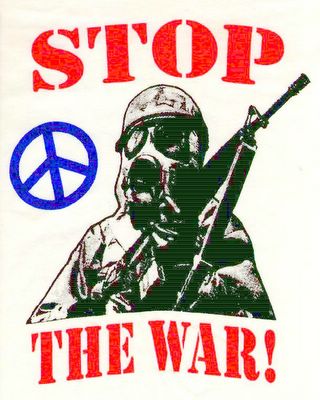
The Subliminal Message is no longer.
Ms. Bigot von Zwieten likes her subliminal messages to the public.
Her favorite is the picture of a soldier wearing a gas mask for the "Watch FREE Video."
It appears at the end of one or both of the 'News Break' usually hosted by Headline News' Erica Hill. What makes this ad so curious to it's intent is the fact there are other people in the picture along with a lone soldier. The soldier is the one with the gas mask while everyone else is exposed to whatever the soldier anticipates he needs protection from. Does he intend to 'gas' someone? Perhaps as he is the only one protected. It's a very bad advertisement. Lots of moral and ethical issues. Isn't this news agency interested in winning perhaps a 'Clio' award?

Tuesday, July 12, 2005
The Religious Bigotry of CNN NewsNight's Morning Papers
Aaron Brown did not do his pre-program ad, he did write his own e-mail.
International Herald Tribune
The Chrisitan Science Monitor They are touble makers. The article pointed to was one that states the USA government is exhibiting obsession over this shuttle launch. That is a lie. They left the shuttle out in a hurricane where there was tornado watches. That negligence to detail increased the percentage of error and danger for the astronauts. The people at this second class news rag are not qualified to 'make judgements' regarding issues of sound science. They are nothing but troublemakers and always have been. They don't value human life over their politics. The fact of the matter is both shuttle tragedies happened under Republican Presidents, Reagan and Bush. It demonstrates clearly along with this negligence of this shuttle launch why these accidents happen. These presidents demand not absolute and obsessive safety, they demand cutting corners for the sake of efficiency. The shuttle should have been returned to it's hanger until it was completely safe to bring it out for a launch.
El Pais
The Washington news
Cincinnati Enquirer
Chattanooga Times Free Press
Detroit News
NewsNight has a Honor Soldier Segment tonight listing five soldiers all killed in action; Moski, age 24, Oliver, age 26; Gresham, age 23; Steffeny, age 28 and Brewer, age 22.
The Time Breakdown is for a show with a total of 57 minutes.
Aaron 15 minutes, 7 minutes were live. Of that 7 minutes 4 were wasted on a propaganda segment of Anti-American sentiment regarding the ways to compromise citizens desire for more security while all the guest, Mr. James Carafano could propose was economic benefits of reducing security due to the fact most users of public transportation are 98% average folks. Right. But, what Aaron was not allowed to point out to balance this extremism was the fact all our measures are to stop that 2% of killers.
Others :: 25 minutes with a very qualified segment by Nic Robertson on how Islamic groups in London feel so threatened they don't feel they can afford recognition of any person viewed as Islamic being a terrorist, including persons like Osama bin Laden. Nic is very qualified to speak to these issues. I have never known him or Christiana Amanpour to be propagandists. Thank you, Nic. Appreciate the insight.
Commercials :: 17 minutes of which two were for Big Oil.
The entire set of journalists delivering commentary were caucasian as were all the commericals.
At this point having observed this program from it's inception and realizing CNN and in particularly NewsNight has undergone monsterous changes it leads me to speculate as to why. I take license to speculate.
Ted Turner has always been an influence in the news business and until this change in administration has always been cutting edge. Like the USA he has lost his edge and so has his news station.
I would like to speculate further about Jane Fonda and her born again Christian dogma influencing 'the culture' of CNN. I find it odd that this very successful Jewish Girl who found a very successful media business man as a spouse would write a book revealing all enough to cause a former spouse to repent in a way that brought Ms. Bigot von Zwieten to CNN as knowing more than any other Christian guru on the planet. It would be a shame if somehow Ms. Bigot attached herself to powerful people to influence the WAY the nation views the news to promote lies and an undermining culture, i.e. Rove and the FCC, to the USA promising to catapult CNN to the top of the charts nationwide as a reformist Christian Jewish network.
International Herald Tribune
The Chrisitan Science Monitor They are touble makers. The article pointed to was one that states the USA government is exhibiting obsession over this shuttle launch. That is a lie. They left the shuttle out in a hurricane where there was tornado watches. That negligence to detail increased the percentage of error and danger for the astronauts. The people at this second class news rag are not qualified to 'make judgements' regarding issues of sound science. They are nothing but troublemakers and always have been. They don't value human life over their politics. The fact of the matter is both shuttle tragedies happened under Republican Presidents, Reagan and Bush. It demonstrates clearly along with this negligence of this shuttle launch why these accidents happen. These presidents demand not absolute and obsessive safety, they demand cutting corners for the sake of efficiency. The shuttle should have been returned to it's hanger until it was completely safe to bring it out for a launch.
El Pais
The Washington news
Cincinnati Enquirer
Chattanooga Times Free Press
Detroit News
NewsNight has a Honor Soldier Segment tonight listing five soldiers all killed in action; Moski, age 24, Oliver, age 26; Gresham, age 23; Steffeny, age 28 and Brewer, age 22.
The Time Breakdown is for a show with a total of 57 minutes.
Aaron 15 minutes, 7 minutes were live. Of that 7 minutes 4 were wasted on a propaganda segment of Anti-American sentiment regarding the ways to compromise citizens desire for more security while all the guest, Mr. James Carafano could propose was economic benefits of reducing security due to the fact most users of public transportation are 98% average folks. Right. But, what Aaron was not allowed to point out to balance this extremism was the fact all our measures are to stop that 2% of killers.
Others :: 25 minutes with a very qualified segment by Nic Robertson on how Islamic groups in London feel so threatened they don't feel they can afford recognition of any person viewed as Islamic being a terrorist, including persons like Osama bin Laden. Nic is very qualified to speak to these issues. I have never known him or Christiana Amanpour to be propagandists. Thank you, Nic. Appreciate the insight.
Commercials :: 17 minutes of which two were for Big Oil.
The entire set of journalists delivering commentary were caucasian as were all the commericals.
At this point having observed this program from it's inception and realizing CNN and in particularly NewsNight has undergone monsterous changes it leads me to speculate as to why. I take license to speculate.
Ted Turner has always been an influence in the news business and until this change in administration has always been cutting edge. Like the USA he has lost his edge and so has his news station.
I would like to speculate further about Jane Fonda and her born again Christian dogma influencing 'the culture' of CNN. I find it odd that this very successful Jewish Girl who found a very successful media business man as a spouse would write a book revealing all enough to cause a former spouse to repent in a way that brought Ms. Bigot von Zwieten to CNN as knowing more than any other Christian guru on the planet. It would be a shame if somehow Ms. Bigot attached herself to powerful people to influence the WAY the nation views the news to promote lies and an undermining culture, i.e. Rove and the FCC, to the USA promising to catapult CNN to the top of the charts nationwide as a reformist Christian Jewish network.
Friday, July 8, 2005
The continued frenzy of Ms. Bigot.
The most hopeful insight of this program which was significant came from Robert Pape who had studied terrorist attacks in Arabia.
For over five years prior to 9/11, Mr. Pape examined not the attacks of suicide bombers but the bombers themselves. Quite contrary to the focus of this program, namely 'Radical Islamic Terrorists' the truth of the suicide bomber phenomina is that these men are not fundamentalists. They are however Sunni Muslims who really mind the precense of the USA on the Arabian Peninsula and other foreign countries where Muslims are majority.
What Mr. Pape pointed to was the fact there was once a program whereby the USA did not maintain a military presence in Islam to obtain oil. It was a grossly successful program.
WHAT ARE WE ALLOWING THIS ADMINISTRATION PERMISSION TO DO TO US by allowing our miliary to assault Arabia? What are we doing to our energy supply? Where are the alternatives?
Ms. Bigot didn't like the statement and quickly shifted to another guest by the name of Daniel Goure who stated the only way to defeat terrorists was to deprive their financial network and to close the USA borders.
If CNN's NewsNight is to believe their own guests then they need to advocate for a different focus in the USA and the withdrawal from Iraq.
That should not be difficult as today there was movement by the Iraqi Defense Minister approaching Iran for assistant in training it's military and police. The Iranians seem eager to help. That removes the USA to other areas and out of Islam.
The only open issues with this new alliance remains the peace with Islam and Israel.
For over five years prior to 9/11, Mr. Pape examined not the attacks of suicide bombers but the bombers themselves. Quite contrary to the focus of this program, namely 'Radical Islamic Terrorists' the truth of the suicide bomber phenomina is that these men are not fundamentalists. They are however Sunni Muslims who really mind the precense of the USA on the Arabian Peninsula and other foreign countries where Muslims are majority.
What Mr. Pape pointed to was the fact there was once a program whereby the USA did not maintain a military presence in Islam to obtain oil. It was a grossly successful program.
WHAT ARE WE ALLOWING THIS ADMINISTRATION PERMISSION TO DO TO US by allowing our miliary to assault Arabia? What are we doing to our energy supply? Where are the alternatives?
Ms. Bigot didn't like the statement and quickly shifted to another guest by the name of Daniel Goure who stated the only way to defeat terrorists was to deprive their financial network and to close the USA borders.
If CNN's NewsNight is to believe their own guests then they need to advocate for a different focus in the USA and the withdrawal from Iraq.
That should not be difficult as today there was movement by the Iraqi Defense Minister approaching Iran for assistant in training it's military and police. The Iranians seem eager to help. That removes the USA to other areas and out of Islam.
The only open issues with this new alliance remains the peace with Islam and Israel.
More of Ms. Bigot's Home Grown Terror
If there is a word to describe NewsNight it is 'frenzied' which actually might be the incompetent mind of Ms. Bigot.
So far in a two hour program we have speculated about 'Radical Islamic Terrorists.' When every Islamic community on the globe has called for a joined effort to stop this terrible plight on their religion. There is no compassion for the fact there maybe terrorists that use Islam as an excuse for recruitment and are not devout.
There was also exploitation of the 'verbal' presentation of Public Transportation instilling feelings of fear rather than reassurance. We have a 'color coded' (like it or not) system to INSURE our SECURITY. That is not so much a terror alert as it is a security increase to reassure the public of better measures to their safety.
This Executive Producer is of this program is not interested in a discussion regarding the safety this nation enjoys because of the measures of it's mayors but more the 'uncertainty' guaranteed by the incompetency of the federal government.
The second half hour is more interesting. Not allowed to understand where the problem is evidently, noted a quick step to the right.
So far in a two hour program we have speculated about 'Radical Islamic Terrorists.' When every Islamic community on the globe has called for a joined effort to stop this terrible plight on their religion. There is no compassion for the fact there maybe terrorists that use Islam as an excuse for recruitment and are not devout.
There was also exploitation of the 'verbal' presentation of Public Transportation instilling feelings of fear rather than reassurance. We have a 'color coded' (like it or not) system to INSURE our SECURITY. That is not so much a terror alert as it is a security increase to reassure the public of better measures to their safety.
This Executive Producer is of this program is not interested in a discussion regarding the safety this nation enjoys because of the measures of it's mayors but more the 'uncertainty' guaranteed by the incompetency of the federal government.
The second half hour is more interesting. Not allowed to understand where the problem is evidently, noted a quick step to the right.
Thursday, July 7, 2005
Ms. Bigot Strikes Again in her own Home Grown Method of Terrorism.
The Pre-Program Promotion for NewsNight continues to be denied the man who stood on the roof of the Time Warner Building during the September 11th attacks. We are all being deprived of expertise that serves us best by a Bigot who wants to control a political lie rather than the truth.
The Truth is Ms. von Zwieten is a racist and religous bigot.
The Truth is Ms. von Zwieten is a racist and religous bigot.
The Religious Bigotry and Racism of CNN's NewsNight
The Racism and Religious Bigotry of this Executive Producer Continues:
Aaron wrote his own e-mail.
The Pre-program commercial was by video tape while the other programs like Larry King was live.
The program was completely caucasian in presentation and shorter in duration by 5 minutes on my clock.
There were no minority presentations while Beth Nissan did a presentation on Africa it was uninspired and statistical evoking no emotional attachment to the subject with still figures which was the billing for the segment. Usually there is a narrative heart felt by the photographer that does the stills.
There was no Honor to the Dead American Soldier Segment but a 'slight of hand' that a taped reporting of the recent killed Navy Seal was billed to substitute for the ACTUAL mention of other soldiers names and deaths. Not hardly and certainly not to any family or friend that might be anticipating same but only left to disappointment.
Aaron 15 minutes - 10 minutes live
Others 22 minutes
Commercials 15 minutes with two Big Oil included.
The "Morning Papers" segment exhibited it's ususal Religious Bigotry
Rocky Mountain News
The Washington Times
The Times of London
The International Herald Tribune
Daily News
The Christian Science Monitor
Chicago Sun Times
Aaron wrote his own e-mail.
The Pre-program commercial was by video tape while the other programs like Larry King was live.
The program was completely caucasian in presentation and shorter in duration by 5 minutes on my clock.
There were no minority presentations while Beth Nissan did a presentation on Africa it was uninspired and statistical evoking no emotional attachment to the subject with still figures which was the billing for the segment. Usually there is a narrative heart felt by the photographer that does the stills.
There was no Honor to the Dead American Soldier Segment but a 'slight of hand' that a taped reporting of the recent killed Navy Seal was billed to substitute for the ACTUAL mention of other soldiers names and deaths. Not hardly and certainly not to any family or friend that might be anticipating same but only left to disappointment.
Aaron 15 minutes - 10 minutes live
Others 22 minutes
Commercials 15 minutes with two Big Oil included.
The "Morning Papers" segment exhibited it's ususal Religious Bigotry
Rocky Mountain News
The Washington Times
The Times of London
The International Herald Tribune
Daily News
The Christian Science Monitor
Chicago Sun Times
Wednesday, July 6, 2005
The Racism of Sharon von Zwieten Continues...
... with the live return of Aaron Brown for the entire program, countering the claim he is oppressed from the previous John King broadcast on Friday.
Aaron 35 minutes
Others 18 minutes which included a taped segment whereby Jason Carroll was heard but not seen. The entire show was completely caucasian with the other visual presence of the lovely Sophia Choy for the news segments. Aaron was engaged with her and courteous. She was not shunned in anyway as a minority.
There was no Honor Segment to the American Dead soldiers.
Commercials 17 minutes featuring three Big Oil Commercials.
Better but not exactly the type of enthusiasm for fairness one would expect from a decent program.
Aaron 35 minutes
Others 18 minutes which included a taped segment whereby Jason Carroll was heard but not seen. The entire show was completely caucasian with the other visual presence of the lovely Sophia Choy for the news segments. Aaron was engaged with her and courteous. She was not shunned in anyway as a minority.
There was no Honor Segment to the American Dead soldiers.
Commercials 17 minutes featuring three Big Oil Commercials.
Better but not exactly the type of enthusiasm for fairness one would expect from a decent program.
Tuesday, July 5, 2005
The Oppression Continues at Ms. Bigot's NewsNight
Aaron Brown is still not promoting his hour of news.
Aaron Brown is still not writing his own e-mail.
Aaron Brown is still not writing his own e-mail.
Saturday, July 2, 2005
Ms. Bigot lavishes in Self Desire
Aaron was 'put off' tonight. So was this program's usual 'Headline News' Doll Face. Tonight the attractive and bright, Ms. Sophia Choy was delivering the news headlines. This minority face was opted for because of my criticism yesterday and the chance a critic would bring a unfavorable light to John King with his extremist Religious Right Party views.
Well, a token minority isn't going to stop the fact the rest of the program did not exhibit any minorities on all of three live panel discussions. Jeffery Toobin might be a minority but he is the companies legal consultant and doesn't really count in equity of representation. Gratefully, Mr. Toobin does not have the bias, racist or bigot issues this Executive Producer has.
Aaron was left off tonight because his is not the correct extremist views that John King is. John's views of the world was grossly endorsed by appearances that were all live and a total of 23 Religious Right minutes regarding not a tribute to Sandra Day O'Connor but ONLY speculation about the next justice. He was joined by his White House Female Counter part with her biased and bigoted view of the world, Dana Bash, who akinned the judicial decision to a Pope's Conclave. Talk about offensive.
The Neocon Executive Producer lavished herself in five Big Oil Commercials as it she has no stake in Global Warming. Even the most progressive commercials of these companies are deceptive at best. The messages they put out is for 'image' approval by the public and not substanitive of their actual business practices. One of BP's commercials is highly racist, they also have the highest death rate of any of the companies among their employees.
The time break down is this:
John King 23 minutes all live.
Others 20 minutes
Commercials 17 minutes
There was no segment Honoring the Dead American Soldiers
The News Night program tonight is proof positive that Ms. Bigot von Zwieten uses taped segments of Aaron to control the message and oppresses his talent. He is made to pander to an agenda adverse to the well being of the USA including a commercial segment for the new CNN Video Segments featuring 'WMD' in one form or another when there is never that subject on the e-page.
I am rarely 'W'rong about a person and this tonight is complete proof of the adverse influence this Executive Producer likes to exert on the American Public. If it weren't for Aaron Brown the program would probably be the least watched program on the planet. I can make that statement knowing Aaron is a professional unaffected by personal injury or glory. That trait is demonstrated over and over including his receipt of upsetting news he received from Ms. Bigot while completing his responsiblities to NewsNight. She did it deliberately to 'rattle' his nerve enough to cause an issue with the broadcast. I have no concept what could actual affect Aaron Brown so much to change the cool, calm demeanor that pervades his professional life.
Well, a token minority isn't going to stop the fact the rest of the program did not exhibit any minorities on all of three live panel discussions. Jeffery Toobin might be a minority but he is the companies legal consultant and doesn't really count in equity of representation. Gratefully, Mr. Toobin does not have the bias, racist or bigot issues this Executive Producer has.
Aaron was left off tonight because his is not the correct extremist views that John King is. John's views of the world was grossly endorsed by appearances that were all live and a total of 23 Religious Right minutes regarding not a tribute to Sandra Day O'Connor but ONLY speculation about the next justice. He was joined by his White House Female Counter part with her biased and bigoted view of the world, Dana Bash, who akinned the judicial decision to a Pope's Conclave. Talk about offensive.
The Neocon Executive Producer lavished herself in five Big Oil Commercials as it she has no stake in Global Warming. Even the most progressive commercials of these companies are deceptive at best. The messages they put out is for 'image' approval by the public and not substanitive of their actual business practices. One of BP's commercials is highly racist, they also have the highest death rate of any of the companies among their employees.
The time break down is this:
John King 23 minutes all live.
Others 20 minutes
Commercials 17 minutes
There was no segment Honoring the Dead American Soldiers
The News Night program tonight is proof positive that Ms. Bigot von Zwieten uses taped segments of Aaron to control the message and oppresses his talent. He is made to pander to an agenda adverse to the well being of the USA including a commercial segment for the new CNN Video Segments featuring 'WMD' in one form or another when there is never that subject on the e-page.
I am rarely 'W'rong about a person and this tonight is complete proof of the adverse influence this Executive Producer likes to exert on the American Public. If it weren't for Aaron Brown the program would probably be the least watched program on the planet. I can make that statement knowing Aaron is a professional unaffected by personal injury or glory. That trait is demonstrated over and over including his receipt of upsetting news he received from Ms. Bigot while completing his responsiblities to NewsNight. She did it deliberately to 'rattle' his nerve enough to cause an issue with the broadcast. I have no concept what could actual affect Aaron Brown so much to change the cool, calm demeanor that pervades his professional life.
Friday, July 1, 2005
The Bruised Ego of Ms. Bigot von Zwieten
I am environmentalist. The Bigot at CNN knows full well about this blog.
An unprecedented display of four oil commercials were displayed tonight in retaliation of my activism regarding this bigotry/racism. The oil companies were Kerr-McGee, BP and Exxonmobile.
She is a nasty person.
This was my answer to her anger. She hasn't had a 'fit' in awhile. I guess I am not behaving the way I am supposed to as a good Jew friend of Aaron. Gee, too bad. My priorities are right and I won't compromise my advocacy for any issue that is globally correct.
A posting to my friends at The New York Times message board who knows what I go through all too well.
conti2005 - 11:06 PM ET June 30, 2005 (#7847 of 7850)Condi Rice (to all Arab Nations) : "The USA will no longer opt for stability over democracy." WELL, Bully for you Condi !
This is interesting - Kerr McGee as slick as the oil they pump.
Kerr-McGee entered into an agreement to purchase a thorium plant.
The thorium plant was owned by a company being sued for cancer causing employment leading to death.
http://vls.law.vill.edu/locator/3d/Sept1994/94a08 [...]
"From prior to the turn of the 20th century continuing until 1940, the Welsbach Incandescent Light Company maintained and operated a factory in Gloucester City, New Jersey, for manufacturing incandescent gas mantles, a process involving extracting thorium from monazite ores."
Kerr-McGee won in a lower court in that they were not liable due to the fact they inherited the toxins from the sale and was not the company of true liability.
I am not going to get into the particulars but basically the company was purchased by Kerr-McGee due to it's judgement liability. The Appelant Courts reversed the judgement for Kerr-McGee to be held responsible for the liabilty of the company they purchased in order for the first company to 'get away with it.'
III. CONCLUSION We will reverse the order of September 8, 1993, and will remand the matter to the district court for entry of a summary judgment in favor of Kerr-McGee.
THIS IS THE TYPE of judgement that will be in danger of turning against the Public Trust and Public Good with the nominations by Bush and a Puppet Senate.
The time breakdown on NewsNight tonight was:
Aaron 16 minutes - 12 minutes live.
Others 29 minutes
Commercials 15 minutes
No Honor Segment for the American Dead Soldiers.
Minority Report has disappeared AGAIN. Every reporting member of the staff was WHITE.
An unprecedented display of four oil commercials were displayed tonight in retaliation of my activism regarding this bigotry/racism. The oil companies were Kerr-McGee, BP and Exxonmobile.
She is a nasty person.
This was my answer to her anger. She hasn't had a 'fit' in awhile. I guess I am not behaving the way I am supposed to as a good Jew friend of Aaron. Gee, too bad. My priorities are right and I won't compromise my advocacy for any issue that is globally correct.
A posting to my friends at The New York Times message board who knows what I go through all too well.
conti2005 - 11:06 PM ET June 30, 2005 (#7847 of 7850)Condi Rice (to all Arab Nations) : "The USA will no longer opt for stability over democracy." WELL, Bully for you Condi !
This is interesting - Kerr McGee as slick as the oil they pump.
Kerr-McGee entered into an agreement to purchase a thorium plant.
The thorium plant was owned by a company being sued for cancer causing employment leading to death.
http://vls.law.vill.edu/locator/3d/Sept1994/94a08 [...]
"From prior to the turn of the 20th century continuing until 1940, the Welsbach Incandescent Light Company maintained and operated a factory in Gloucester City, New Jersey, for manufacturing incandescent gas mantles, a process involving extracting thorium from monazite ores."
Kerr-McGee won in a lower court in that they were not liable due to the fact they inherited the toxins from the sale and was not the company of true liability.
I am not going to get into the particulars but basically the company was purchased by Kerr-McGee due to it's judgement liability. The Appelant Courts reversed the judgement for Kerr-McGee to be held responsible for the liabilty of the company they purchased in order for the first company to 'get away with it.'
III. CONCLUSION We will reverse the order of September 8, 1993, and will remand the matter to the district court for entry of a summary judgment in favor of Kerr-McGee.
THIS IS THE TYPE of judgement that will be in danger of turning against the Public Trust and Public Good with the nominations by Bush and a Puppet Senate.
The time breakdown on NewsNight tonight was:
Aaron 16 minutes - 12 minutes live.
Others 29 minutes
Commercials 15 minutes
No Honor Segment for the American Dead Soldiers.
Minority Report has disappeared AGAIN. Every reporting member of the staff was WHITE.
Thursday, June 30, 2005
The color of 'Defiance'
The Religious Bigotry of CNN's NewsNight "Morning Papers"
Aaron is still not doing the pre-program ad for his news hour. Discriminatory. He has done that ad several times an evening for years. It is the Jew in him to reach his community that drives him and there was always that 'novelty' to watch him go from sleeves rolled to the elbow to suit at the news hour. He wanted his viewership to understand NewsNight was his dedication to them. He loves the people in the audience. They aren't taken for granted. It's bigotry and oppression. It's horrible for him and I know it.
The Time Allotment for Aaron is as follows:
June 29, 2005
Aaron 23 minutes - 9 minutes live
Others 21 minutes
Commercials 16 minutes
June 24, 2005
Aaron - 16 minutes - 4 minutes live
Commercials - 16 minutes
Others - 28 minutes
No Honor Segment to the USA Military Dead
June 27, 2005
Aaron 27 minutes - 14 minutes live - the BTK murders were extensively covered. Aaron has a great deal of experience covering the Green River Killer so it was a natural he did a majority of the show. It's the way it should be.
Others 18 minutes
Commercials 15 minutes
June 28, 2005
Aaron 16 minutes - 9 minutes live
Others 32 minutes
Commercials 12 minutes
No Honor Segment to the USA Military Dead
June 29
Aaron 23 minutes - 13 minutes live
Others 21 minutes
Commercials 16 minutes
No Honor Segment to the USA Military Dead
The overall 'tone' of the show is better. Aaron is enjoying his broadcast more. There are aspects of this that still in not right. The staff took over the e-mail AGAIN.
Aaron is still not doing the pre-program ad for his news hour. Discriminatory. He has done that ad several times an evening for years. It is the Jew in him to reach his community that drives him and there was always that 'novelty' to watch him go from sleeves rolled to the elbow to suit at the news hour. He wanted his viewership to understand NewsNight was his dedication to them. He loves the people in the audience. They aren't taken for granted. It's bigotry and oppression. It's horrible for him and I know it.
The Time Allotment for Aaron is as follows:
June 29, 2005
Aaron 23 minutes - 9 minutes live
Others 21 minutes
Commercials 16 minutes
June 24, 2005
Aaron - 16 minutes - 4 minutes live
Commercials - 16 minutes
Others - 28 minutes
No Honor Segment to the USA Military Dead
June 27, 2005
Aaron 27 minutes - 14 minutes live - the BTK murders were extensively covered. Aaron has a great deal of experience covering the Green River Killer so it was a natural he did a majority of the show. It's the way it should be.
Others 18 minutes
Commercials 15 minutes
June 28, 2005
Aaron 16 minutes - 9 minutes live
Others 32 minutes
Commercials 12 minutes
No Honor Segment to the USA Military Dead
June 29
Aaron 23 minutes - 13 minutes live
Others 21 minutes
Commercials 16 minutes
No Honor Segment to the USA Military Dead
The overall 'tone' of the show is better. Aaron is enjoying his broadcast more. There are aspects of this that still in not right. The staff took over the e-mail AGAIN.
Friday, June 24, 2005
Second Case of Mad Cow Disease Found in U.S.; When Politicians Apologize
Second Case of Mad Cow Disease Found in U.S.; When Politicians Apologize
Aired June 24, 2005 - 22:00 ET
THIS IS A RUSH TRANSCRIPT. THIS COPY MAY NOT BE IN ITS FINAL FORM AND MAY BE UPDATED.
AARON BROWN, HOST: Here's something to chew on, Larry, something more than just a second case of mad cow disease in the United States and all that could mean for the food supply and the economy. Consider now, the possibility that we might never have known about it at all, but for inspector general at the Department of Agriculture, who might have exceeded her authority. She ordered a third round of testing on a sick cow that was declared free of all disease, last fall. Standard procedure said otherwise. The cattle industry raised a fuss. That, of course, was yesterday. Today, the tests came back positive.
(BEGIN VIDEOTAPE)
BROWN (voice-over): It was the second confirmed case of mad cow in the U.S. The first in an animal actually raised in the country.
MIKE JOHANNS, U.S. AGRICULTURE SECRETARY: Results confirm the presence of BSE in this animal, an animal that was blocked from entering the food supply.
BROWN: BSE is mad cow disease by its formal name and the sick animal didn't just show up yesterday. It was first tested last winter in November and found clean. The retesting found something else. The U.S. Agriculture Department says the discovery shows its system of testing suspected animals works; that it keeps Americans safe.
JOHANNS: ... thanks to the fire walls that are in place. It is critically important to note that this animal was identified as a high risk animal. A sample was taken and the carcass was incinerated.
BROWN: So, while both the beef industry and the government believe that U.S. meat is safe from mad cow, foreign buyers may not be so certain. After today's announcement, the cattle futures market indicated a five to ten percent drop, come Monday morning.
GREGG DOUD, NATIONAL CATTLEMEN'S BEEF ASSOCIATION: About one- third of our exports or $1.4 billion in beef trade goes to Japan, that's our biggest market and it's a critical component of the value of our production for U.S. beef producers.
BROWN: The U.S. beef industry took a big hit from the Japanese in 2003, after a Canadian-born dairy cow transported to the United States was diagnosed with mad cow. Several dozen countries joined Japanese in banning U.S. beef, a nearly $4 billion business. Mexico, the United States' second largest beef customer and other importers lifted their ban last year and expect to stay open to U.S. products. Japan has kept its ban and only recently started talks to lift it. On cattle ranches and in giant feed lots in the United States tonight, the hope is that today's announcement will not affect those talks.
(END VIDEO TAPE)
BROWN: Which brings us to this: There's little doubt that as a practical matter, mad cow is a lot more harmful to ranchers and meat packers and cows, than it is to people. Which many would argue is not quite the same thing as saying what the government essentially did today: bon appetit.Here's CNN's Dr. Sanjay Gupta.
(BEGIN VIDEOTAPE)
DR. SANJAY GUPTA, CNN SR. MEDICAL CORRESPONDENT: The government assured the public that despite the new case of mad cow disease, U.S. beef is safe to eat. The BSE threat to humans in this country is so remote that there is a better chance you'll get hurt crossing the street to get to the grocery store, than by the beef you buy. That's because after an outbreak of mad cow in Europe in the early '80s, the National Cattlemen and Beef Association, in 1996, voluntarily banned the use of feed containing animal parts that could harbor the infectious agents causing mad cow disease. In 1997, the FDA made that ban mandatory, to reduce or eliminate the risk to the human food supply. This animal probably became infected by eating parts of the nervous system of other animals before the ban went into place. The animal was a downer, meaning it was unable to walk. Even though mad cow was not confirmed at the time, it was suspected and the animal was slaughtered and immediately excluded from the food supply.
JOHANNS: This animal was blocked from both the human food supply and the animal feed supply. The carcass was incinerated to ensure it did not and could not pose any kind of threat to public health.
GUPTA: For now, younger cows are more likely to be slightly safer, especially ones born after 1997. Still, the problem is a cow could be infected with mad cow disease for several years before symptoms appear. So, some consumer advocates question whether infected cows to could still be entering the food supply unknowingly and the watchdog group Consumer's Union is concerned that there may be loopholes. For example, part of an animal known to carry mad cow-type disease could legally go into feed for pigs, chickens, maybe even pets. For the time being, the industry and its critics are at odds. The industry says U.S. beef is safe and today was an example of the system working. The animal never entered the food supply. Critics say it's another wakeup call to the USDA and the Food and Drug Administration that they need to adopt additional safeguards, like increased testing and mandatory tracking of cows from birth to slaughter. Dr. Sanjay Gupta, CNN, Atlanta.
(END VIDEOTAPE)
BROWN: Other news: beginning with Iraq. Now the new prime minister meeting with the president today. The visit comes just shy of a year since the return of sovereignty to Iraq, but far short of other things: A new constitution for one and then there's real security. In the year since the handover, thousands of Iraqis, nearly 900 American troops have died in Iraq, many hundreds of insurgents as well. Today was especially grim in how many were killed and who. From the Pentagon tonight, CNN's Jamie McIntyre.
(BEGIN VIDEOTAPE)
JAMIE MCINTYRE, CNN SR. PENTAGON CORRESPONDENT: Pentagon sources say of the six U.S. troops killed when a suicide car bomber hit their seven-ton truck in a convoy attack near Fallujah, at least three were women and of the 13 wounded in the powerful blast in the small arms attack that followed, 11 were women. That makes Thursday the deadliest day for American women in uniform since World War II, when a Japanese suicide plane hit the hospital ship "Comfort," killing six army nurses in 1945. Since the Pentagon opened most military jobs to women a decade ago, they've grown to 15 percent of the force and do everything from fly helicopters, to escorting convoys, to fixing tanks. Women are still barred from direct combat units like infantry, armor and special forces, but in Iraq, that doesn't keep them out of the line of fire. Medical personnel, for instance, are often close to the action. LT.
SHARON BATTISTE, U.S. NAVY NURSE: Should we get an injured Marine, they actually bring the Marine back to us. So, even though we are very close to the front line, we're not correctly within the firefight.
MCINTYRE: Currently, there are more than 11,000 American women serving in Iraq and before this attack, 36 had died; 24 as a result of hostile fire. That compares to only two women killed by hostile fire in all of World War I, 21 in World War II, none in the Korean War, one in Vietnam, and five in the first gulf war. Earlier this year, Congress debated new rules that would have moved women out of units that serve on the front lines, but the plan was rejected after the Army argued it would close some 22,000 support jobs to women, jobs in critical specialties like military police.
SGT. LEIGH ANN HESTER, SILVER STAR RECIPIENT: As MP.s, we're out there everyday, outside of the wire, sweeping for roadside bombs and dealing with insurgents. So, in my opinion, I think women do just as good a job as the men do here. MCINTYRE: Sergeant Leigh Ann Hester was awarded the Silver Star for her role in an operation in March that killed 26 insurgent in a fierce firefight, videotaped by one of the enemy fighters. In a war without clear front lines, it's another example of women facing the same dangers as men. (on camera): Sources say many of the Marines killed or wounded in this convoy attack were women serving in a so-called lioness team, an all-female unit specializing in searching and interacting with Iraqi female civilians, so as not to give offense. It's a role considered vital in winning over the Iraqi people. Jamie McIntyre, CNN, the Pentagon.
(END VIDEOTAPE)
BROWN: Coming up next: The upcoming political battle over the Supreme Court. But first, in a little early tonight to make up for all of the times we've been late, a look at some of the other stories that have made news today. Sophia Choi, at "HEADLINE NEWS" in Atlanta.
SOPHIA CHOI, CNN HEADLINE NEWS: Hi, Aaron. Well, a tragic end to the search for three missing boys in Camden, New Jersey. All three boys have been found dead in the trunk of a car parked near the yard where they were last seen. The father of one of the missing boys opened the trunk of the car and collapsed screaming. Police immediately cordoned off the area. The boys, Jesstin Pagan, Daniel Agosto and Anibal Cruz, vanished on Wednesday. Firefighters had to keep their distance from a massive fire at St. Louis industrial plant. Flames shot 50 feet into the air and the blaze sent huge fireballs shooting into the air with billowing black smoke. The Praxair plant packaged propane and other gases for industrial use. One witness said pieces of metal from exploding tanks were shooting from the scene like pieces of giant shrapnel. But so far, there have been no reports of injuries. In China, the death toll from record summer floods has now climbed to more than 500. Forecasters warn: More torrential rains may hit the Pearl River delta near Hong Kong and Macao. The official Chinese news agency says, "after two weeks of rain, the Pearl River is reaching its highest peak, ever and more than 1.5 million people have been evacuated.And Aaron, just a reminder of the new feature at CNN.com: If you click the video link, you'll be able to see the day's best news clips at your leisure and at no cost -- Aaron.
BROWN: Sounds like a fair price. Thank you very much. We'll check with you in a half an hour. Straight ahead on the program, all the ingredients of a major battle: big money, high stakes and passion to spare.
(BEGIN VIDEOTAPE)
BROWN: On the right...
UNIDENTIFIED MALE: We're not going to be caught unprepared.
BROWN: And on the left...
UNIDENTIFIED MALE: But the most important thing is getting out the message as to what's at stake, what could happen. BROWN: Bracing for the fight of their lives over the next Supreme Court nominee.
SEN. DICK DURBIN, (D) ILLINOIS: I sincerely regret if what I said caused anyone to misunderstand my true feelings.
BILL CLINTON, PRESIDENT OF THE UNITED STATES: I deeply regret that.
RICHARD NIXON, PRESIDENT OF THE UNITED STATES: In all of the decisions I have made in my public life, I have always tried to do what was best for the nation. BROWN: The politics of saying sorry.
UNIDENTIFIED MALE (through translator): I'm not looking for my family anymore. I don't have any hope of finding them.
BROWN: Six months after the tsunami, how the orphans are coping and who is helping them.
ROBERT KNIGHT, CONCERNED WOMEN FOR AMERICA: I think the people at PBS see themselves as social agents. BROWN: With Public Broadcasting under fire, a NEWSNIGHT conversation with Bill Moyers.
BILL MOYERS, JOURNALIST: Ideologues embrace a world view that can't be changed because they admit no evidence to the contrary.
BROWN: From New York on a Friday night, this is NEWSNIGHT.
(END VIDEOTAPE)
(COMMERCIAL BREAK)BROWN: There's no fountain of youth, but the U.S. Supreme Court comes pretty close. Still even there, there are limits. William Rehnquist, the chief justice is 80 and fighting cancer. His colleague, Justice Stephens is 85. Even if Mr. Rehnquist decides not to announce his retirement, as expected over the summer, time and the law of averages may soon produce an opening on the court. And when it does, look out, that food fight over filibusters and nuclear options, consider that an appetizer. Here's CNN's Joe Johns.
(BEGIN VIDEOTAPE)
JOE JOHNS, CNN CONGRESSIONAL CORRESPONDENT (voice-over): The battle over the Supreme Court is about to begin.
UNIDENTIFIED MALE: We're not going to be caught unprepared. JOHNS: Activists are huddled in their war rooms plotting strategy, rallying the ground troops.
UNIDENTIFIED MALE: It'd be a good idea to go over this with the field. Actually, when you are done with it, we can e-mail it out to them, so they'll have it in front of them.
JOHNS: In the video editing bays, television attack ads are waiting for someone to push the play button.
ANNOUNCER: The president nominated George Washington. Democrats attacked Washington for his environment record of chopping down cherry trees
.JOHNS: Conservative activist Chris Myers and his group, Progress for America, are preparing to defend the president's nominee, whoever it is, against an expected onslaught from liberals. They have organizers in 21 states and an $18 million war chest.
CHRIS MYERS, PROGRESS FOR AMERICA: We do know that if there is a retirement, that it will be defined quickly, we know the kinds of patterns that the left exhibits based upon the things they've done in the past.
UNIDENTIFIED MALE: All right! JOHNS: On the left, Ralph Neas, a 30 year veteran of these wars, sometimes called 101st senator for his civil rights advocacy.
RALPH NEAS, PEOPLE FOR THE AMERICAN WAY: We're well-prepared for whatever happens, whether it's one, two or three possible, vacancies.
JOHNS: Neas and his group, People for the American Way, fear the president will nominate someone who will take a wrecking ball to civil liberties. They've already sent out a million pieces of mail with more to come once a nominee is named. And they're taking the fight to the Internet. NEAS: We have registered a number of domain names, both with respect to the name of the campaign. And we want to make sure that we're ready to go from the very first moment.
JOHNS: At the center of all this, 100 U.S. senators.
SEN. EDWARD KENNEDY, (D) MASSACHUSETTS: If the president submits an in-your-face nomination to flaunt his power, it takes time and effort, and sweat and tears before the truth about the candidate is fully discovered.
UNIDENTIFIED MALE: And over the last four years, this president's judicial nominees have been labeled kooks, Neanderthals, and even turkeys. Respected public servants and brilliant jurists have been called scary and despicable. JOHNS: Senator Arlen Spector, the chairman of the Judiciary Committee, the primary battleground, warns it's a little early to get so worked up over a possible Rehnquist retirement.
SEN. ARLEN SPECTER, (R-PA) JUDICIARY COMMITTEE CHAIRMAN: What he intends to do or what anyone else intends to do remains to be seen. But it is hardly the time, given the kind of confrontation in this body, which we have seen on the judicial nomination process, to be looking to pick a fight.JOHNS: But with the stakes this high and the troops this ready, a fight is the one thing sure to happen. Joe Johns, CNN, Washington.
(END VIDEOTAPE)
BROWN: This has been another week of the apology: apologies either offered or demanded. Search apologies on Google news and you'll get more than 3,000 stories, even if a lot of them aren't worth the paper they're written on. That's a lot of apologies. And so with apologies to Ella Fitzgerald, some of them don't mean a thing if they ain't got that swing. Here's CNN's Jeff Greenfield.
(BEGIN VIDEOTAPE)
UNIDENTIFIED FEMALE: Love means never having to say your sorry.
JEFF GREENFIELD, CNN CORRESPONDENT (voice-over): Well love, maybe, but when it comes to politics, no way.
(MUSIC)
GREENFIELD: When Illinois Senate Durbin compared prison abuses in Guantanamo to the Soviet gulag and to the Nazis, the Republicans demanded an apology.
JOHN MCCAIN, (R) ARIZONA: I think that Senator Durbin owes not only the Senate an apology -- I don't know if -- not censure would be in order, but an apology.
GREENFIELD: He did. DURBIN: Some may believe that my remarks crossed the line. To them, I extent my heartfelt apologies.
GREENFIELD: When White House political guru Karl Rove took a swipe at the liberal response to 9/11...
KARL ROVE, WHITE HOUSE POLITICAL ADVISER: Liberals saw the savagery of the 9/11 attacks and wanted to prepare indictments and offer therapy and understanding to our attackers.
KING: Some Democrats called for contrition or dismissal.
SEN. CHARLES SCHUMER, (D) NEW YORK: Karl Rove has said many things and we understand he's a political infighter. But there's a certain line that you should not cross.
GREENFIELD: White House said, forget about it. Earlier this month, the U.S. Senate apologized for not passing anti-lynching laws. Some 4,700 recorded lynchings of American blacks took place between 1882 and 1968.And earlier this spring, President Bush apologized for the Yalta Agreements after World War II that left much of Eastern Europe under Soviet control.(on camera): So why do politicians apologize? Well, sometimes it's because they recognize what history has already concluded, that an action or inaction was a serious wrong. Sometimes, it's because they realize they've made an actual misstatement. And sometimes, maybe most times, it's an attempt to save a political career. (voice-over): President Clinton did all of this. He apologized for medical experiments at Tuskegee Institute in the 1930s that left black subjects untreated for syphilis. In Africa, he apologized for the slave trade and the inaction in Rwanda that left hundreds of thousands massacred. And of course, he also apologized for more personal matters.
CLINTON: I deeply regret that.
GREENFIELD: President Nixon, who was once quoted as saying, "contrition is bull" -- that's the PG version -- did apologize for Watergate, but only after he resigned. Back in 1969, New York Mayor John Lindsay, facing a bleak reelection climate, won after acknowledging, "I've made mistakes," something New Yorkers really wanted to hear from their aristocratic mayor. And the first President Bush sought to win back disaffected conservatives in 1992 by saying he was wrong to go along with tax increases. That wasn't enough to win him a second term. (on camera): There are lots more fascinating examples of why and when politicians apologize, but we just don't have the time to show them all to you. And for that, I'm really, really, deeply sorry. Jeff Greenfield, CNN, New York.
(END VIDEOTAPE)
BROWN: Coming up on NEWSNIGHT on this Friday, it's been six months as the wall of water smashed into houses and cities and lives across South Asia. We'll look at how or if aid has really reached those who need it. And later, public television under fire from all directions. We'll talk with Bill Moyers. But we'll take a break. First, around the world, this is NEWSNIGHT.
(COMMERCIAL BREAK)
BROWN: Tonight, we return to a corner of the world that was nearly wiped clean by the tsunami last December, Aceh province in Indonesia. In the half year that has passed, the rebuilding has begun. It's slow work when you start from square one.
(BEGIN VIDEOTAPE)
BROWN (voice-over): Six months and nearly $2 billion later, the scope of the recovery effort, according to various relief agencies in Aceh, can be measured by the numbers. A half a million were left homeless after the tsunami; a quarter of a million are still living in tents; 150,000 in government barracks; 100,000 others are home or living with relatives. Housing reconstruction has moved very slowly. Three thousand to 4,000 homes have been rebuilt; 20,000 more should be completed in the next six months. But at least 100,000 more homes still need repair. Fresh water, on the other hand, is available to almost all who need it; 480,000 people needed fresh water restored, now all but 60,000 have it. Electrical power in Banda Aceh is at about 60 percent of the pre- tsunami level. UNICEF reports that 200 temporary schools opened just this week; 90,000 children have been immunized against measles, and major outbreaks of other diseases have been averted. The Indonesian government says 5,270 children lost one or both parents in Aceh. Another 56,000 were listed as missing or killed.
(END VIDEOTAPE)
BROWN: Rebuilding all that was lost will take an enormous amount of money. Global pledges for tsunami relief now total more than $10 billion. Good intentions, of course, are one thing. Making good on them is another. Here's CNN's Chris Huntington.
(BEGIN VIDEOTAPE)
CHRIS HUNTINGTON, CNN CORRESPONDENT (voice-over): From southern India to Indonesia, to Sri Lanka, lives that were wrecked by last year's tsunami are beginning to return to normal. But many are frustrated with the pace of reconstruction, and no one knows that better than Jan Egeland, the man in charge of disaster relief for the United Nations.
JAN EGELAND, U.N. UNDERSECRETARY GENERAL: Those who lost everything on the 26th of December are understandably impatient now, but it's a long, uphill battle to rebuild those thousands and thousands of destroyed communities.
HUNTINGTON (on camera): According to U.N.'s own accounting, global pledges for tsunami aid now total more than $10 billion. Nearly $6 billion from governments, and $4.5 billion from private and corporate donors, but soliciting pledges has been the easy part. The real trick now is to get those who promised to contribute to send in the money. (voice-over): More than half of the government pledges have yet to be collected. The United States government, for instance, has made good on less than 40 percent of the more than $900 million pledged. That's worse than Japan and Great Britain, but better than Germany and France. But American companies and private citizens lead the world with contributions of more than $1.5 billion. Still, according to the nonprofit group Interaction, less than 20 percent of that $1.5 billion has reached the tsunami disaster zone. Roberta Cohen tracks international aid funding.
ROBERTA COHEN, BROOKINGS INSTITUTION: It isn't happening fast enough. That's for sure. The money is taking a long time, because of local policies and local red tape and local ineptitude.
HUNTINGTON: There are increasing reports of bureaucratic roadblocks. Last month, hundreds of shipping containers filled with relief supplies piled up in an Indonesian port, stranded by paperwork. The international aid group Oxfam was forced to pay 500,000 pounds to Sri Lankan customs officials to import 25 trucks. The money has since been refunded, but it slowed Oxfam's efforts. Perhaps the biggest problem is sorting out land ownership in areas where the tsunami washed away almost all the landmarks, and where property records are spotty at best. Aid worker Elizabeth Stevens just returned from Banda Aceh.
ELIZABETH STEVENS, OXFAM AMERICA: What we need here is a full- court press on the part of governments to resolve the land issues.
HUNTINGTON: Still, Stevens and others familiar with the reconstruction effort are optimistic, and say patience and persistence will pay off.
EGELAND: It takes five to 10 seconds for a tsunami to destroy thousands of communities. It could take five to 10 years to rebuild and build back better, which is our whole ambition. HUNTINGTON: An ambition these children can only hope is fulfilled. Chris Huntington, CNN, New York.
(END VIDEOTAPE)
BROWN: The numbers and the damage seem almost as shocking as the earthquake that caused them. But sometimes the biggest numbers, the hardest hitting are ones and twos -- mothers and fathers, children who don't have them anymore. CNN's Atika Shubert reports on the orphans of the tsunami.
(BEGIN VIDEOTAPE)
ATIKA SHUBERT, CNN CORRESPONDENT (voice-over): These are the children of the tsunami, many of them without homes or parents. It's tough for kids, but no less difficult for those leaving childhood behind -- not quite adults, but no longer children. Teenagers are forced to grow up fast in the wake of this disaster.International aid group World Vision has set up child play areas, but now say youth programs are also needed to deal with he large number of adolescents stranded in the disaster.
MASRAWATI SINAGA, WORLD VISION: The difficult things with the teenagers is at the beginning, but once you can -- especially the difficult things are building trust.
SHUBERT (on camera): Few families want to adopt a rebellious teen, but imagine trying to maneuver through the confusion of adolescence without a mother or father, in fact, without knowing a single relative left alive. (voice-over): Buhari and Hundani (ph) are 18 and 15-years-old. They're not related, but they're brothers, of a sort. When their families were swallowed by the tsunami, they found each other huddled in a mosque with thousands of other survivors yet, utterly alone. "I'm not looking for my family anymore," he says. "I don't have any hope of finding them. If they are still alive, with luck, perhaps they'll find me. We're on our own now." Instead, the boys created their own family when they met Madun Achmad a father who lost his wife and two teenage sons in the tsunami. They live together in a one-room temporary shelter.
MADUN ACHMAD, LOST WIFE AND SONS: I'm alone. He's alone. Bucari (ph) is alone. We're all lonely. He says. We thought how are we going to find a home on our own? So, we banded together and ended up here.
SHUBERT: Madun looks for work during the day unsuccessful most of the time and cooks in the evenings. There's enough money for rice and a single egg, split between the three of them. The burden of raising two teenagers clearly wears on him. Asked if the boys will stick together as a family, at first, Madun is hesitant. We probably shouldn't get any closer, he says jokingly, but the youngest Hamdani (ph) is reluctant to let go of the only family he has left. The thing is, we, me and Buchari (ph) will stick together, he interrupts. We don't have anybody else. Madun nods in agreement, resigned to another evening at his temporary home with his temporary family. Atika Shubert, CNN, Banda Aceh.
(END VIDEOTAPE)
BROWN: Still to come on NEWSNIGHT, a NEWSNIGHT conversation with legendary journalist Bill Moyers of PBS. And the problems of PBS too. We take a break first. This is NEWSNIGHT on CNN.
(COMMERCIAL BREAK)
BROWN: The Public Broadcasting Corporation dodged a bullet this week when lawmakers rejected in the House a 25 percent cut, $100 million in its funding. Republicans say the reason for the proposed cutbacks was money. Democrats say it's all about politics. These are not easy days for Bert and Ernie. The fight on Capitol Hill isn't the only threat to its future. PBS is also taking fire from within. Here's CNN's Tom Foreman.
(BEGIN VIDEOTAPE)
TOM FOREMAN, CNN CORRESPONDENT (voice-over): Out in the suburbs on the edge of D.C., the Rosenbergs are public TV fans. Hannah and her mother have spent hours watching PBS fair.
HANNAH ROSENBERG, 11-YEARS-OLD: I think I watch Barney and Sesame Street and Arthur.
MELISSA ROSENBERG, PBS VIEWER: I think for the kids, it's respectful of their innocence, and educational.
FOREMAN: Not too many commercials.
M. ROSENBERG: Right, not too many commercials. And not the sort of screaming, yelling kinds of cartoons that you often see these days.
FOREMAN: Since National Public Television started in the '60s, it has gathered this kind of ardent supporter, people who admire the educational, cultural and social programming. Robert Knight, however, is not one of them.
ROBERT KNIGHT, CONCERNED WOMEN FOR AMERICA: I think PBS has infused its programming with subtle messages that forward the liberal agenda. FOREMAN: Knight is with Concerned Women for America, a conservative group that says PBS pushes liberal values in shows like this one on the lesbian lifestyle.
ANNOUNCER: Join WETA us as we recognize gay and lesbian pride throughout the month of June.
KNIGHT: I think the people at PBS see themselves as social agents. They see themselves as having this great forum, this great platform to push what they think will be the good society. And I don't think there are enough Christians and conservatives there to keep them in check.
FOREMAN: That may be changing. PBS gets its federal funding through the Corporation for Public Broadcasting, which is led by Kenneth Tomlinson, a Republican. He hired a consultant to look for political bias on the PBS show, "Now" when it was hosted by Bill Moyers. The newly appointed president of PBS, Patricia Harrison used to work with an official at the Republican National Committee. And this week Congress tried to slash a quarter of the PBS budget. Democrats howled
SEN. HILLARY CLINTON, (D) NEW YORK: Days like this, where we have to fight the Republican budget ax from targeting programs that are not only near and dear to children's hearts, but near and dear to parent's hearts.
FOREMAN: The bill was scrapped. But that infuriated many conservative critics who now want all taxpayer funding eliminated. They point out unlike the days when PBS started, today most homes have dozens of channels with shows about nature, art, culture, education. And they say the popular PBS shows draw big corporate donors. They'll be fine.
KNIGHT: It's time they went out on their own. And if the good programs are there they'll draw support. If it's bad programming why should they get taxpayer money to go on air with it?
FOREMAN (on camera): Do you think as a liberal that public television should be more sensitive to conservative views?
M. ROSENBERG: I guess it's something we're going to have to look at. For me, sometimes it feels uncomfortable to hear those viewpoints. But I know that they're out there and I respect that.
FOREMAN: Lyndon Johnson launched PBS, saying television has revolutionary power to change our lives, and neither party should control it. Almost 40 years later, however, the battle over control continues. Tom Foreman, CNN, Washington.
(END VIDEOTAPE)
BROWN: For more than 30 years the name and reputation of journalist and author Bill Moyers has been linked with PBS. Mr. Moyers retired from his public television show "Now" last December. As a young congressional aide in the '60s, he witnessed the birth of PBS. From then to now has been quite a journey. We spoke with him the other day. Is
(BEGIN VIDEOTAPE)
BROWN: Is there a moment, when you became two organized conservative groups? Because I'm not sure it's true of people who are conservative politically necessarily, but organized conservative groups essentially journalistic Satan?
BILL MOYERS, JOURNALIST: There must be. Because suddenly I did sprout horn. They saw it. I didn't see it. I think it's because they didn't -- they weren't hearing what they wanted to hear from somebody who knows them very well. I tracked the conservatives for 40 years. I was in the Johnson campaign against Goldwater. I watched them grow. I did many documentaries about them when they emerged into power. I was the -- I offered Ronald Reagan the first hour on public broadcasting before he was a presidential candidate. I know these guys, and I don't buy their party line, and I don't spout their party line. And so there was a point at which they didn't like -- they weren't hearing what they wanted to hear, and I became their bad boy.
BROWN: John Leo, the columnist, was once talking about this question I think we're all living with now, sort of what media is. And he said, the problem with journalists is not their politics so much, is that they like certain kinds of stories. They like the little guy versus the big corporation. They like the underdog. And that then translates into or can be seen as political. And there's some truth to that, don't you think, that we do, in fact, like the story of the underdog, the little guy?
MOYERS: It was especially true when journalists had bookers and brokers -- I mean, instead of brokers, you know, when they made their bets instead of investing in the stock market. There's not a whole lot of reporting about it -- but yes, this -- I think anyone who grows up in a small town like I do, whose father never made more than $100 a year -- as mine -- $100 a week as mine did, I think we do -- we are concerned about the impact of policies on ordinary people. In my own case, I've spent a lot of time, Aaron, reporting -- my first book was called "Listening to America." I've spent a lot of time listening to people talk about their struggles and listen to them define their hopes and dreams. And 80 million people in this country right now live in households making less than $25,000 a year. There's a big story, not a dramatic story, but an important story.
BROWN: If you look at this sort of body of your life, it's been an extraordinary body of work. You know, the one thing I need to get done is, whatever it is, I need to learn to play tennis or I need to write one more book or shoot one more film or write a novel. Is there one thing unfinished that -- more than anything else?
MOYERS: I've often thought of doing the book of life in progress, of trying to figure out what is it that makes us who we are. What choices do we -- we come to what's called that crucial moment in our lives -- a crucial moment is defined in the Oxford book of dictionary as a moment when you choose between two hypothesis. And I'd like to know why I chose that instead of this. I mean, I'd like to do I guess a book of self-reflection, but there's so much going on, and I have so many opportunities to continue to do some television specials, to do a book on the '60s, when I was a young man, under Kennedy and Johnson. I've got to still, as we all do, make some choices. BROWN: Are you uncomfortable right now -- you have become in this grand debate over what public television is and ought to be -- and that's actually an interesting question about the degree in which we need public television in -- in a mass -- with so much media out there. But are you uncomfortable at the center of this storm, because you were there? Or is that OK?
MOYERS: It's OK with me, because it's unfortunate that the present fight has been cast as a feud between Kenneth Thomas, the chairman of CPB, the Corporation for Public Broadcasting, and Bill Moyers. It's bigger than that. It's about how much government should influence journalism, how much government should control programming. But I'm not uncomfortable, because I'm defining myself in this. You're often defined by those who disagree with you, and I found in this that I'm better able than ever to articulate why we do need public broadcasting. I ran a two-page ad in "The Washington Post" on Tuesday of this week, called
(INAUDIBLE)
Moyers about what public -- I was present at the creation. I was a young White House policy aide in 1964, attending my first meeting on the future of educational television at the Department of Education. I've watched this thing grow. It's flawed, but you know, I like the way you talk about television as a democracy, people vote every time they spin that remote or click that button. I think one of those choices on which they should be free to vote is a choice that is free of commercials and free of commercial values. We started public broadcasting 40 years ago to provide an alternative to what the market was providing, a channel that was free of commercials and free of commercial values. We don't always honor that. Some of the promotions on public broadcasting smack of commercializing, and some of our programs can dumb down just like commercial television. But as people vote on how they want to spend their leisure time, where they want to get their information, they are voting for public broadcasting in sufficient numbers to justify the very small amount of money that we get from the taxpayer.
BROWN: People can say a lot of things about you, and do, but dumbing down anything is not one of them. It's nice to see you. And...
MOYERS: Thank you.
BROWN: (INAUDIBLE) talk to you.
MOYERS: I think this is the most serious and informative program in prime-time, and if that's flattery, then so be it.
BROWN: It is -- I am deeply appreciative of that. Thank you.
(END VIDEOTAPE)
BROWN: Bill Moyers. We talked with him the other day. We'll check some of the day's other headlines after the commercials.
(COMMERCIAL BREAK)
BROWN: At about a quarter to the hour, time for one last look at the headlines. Sophia Choi in Atlanta, good to see you again.
CHOI: Hey, nice to see you, too, Aaron. U.S. Supreme Court Justice Anthony Kennedy thinks lawyers need to start defending judges. In a speech today in Florida, Justice Kennedy said, there's nothing wrong with criticizing cases, but lawyers should explain the judicial process when judges come under attack, and he said, criticism should not be aimed at individual judges or the judiciary as a whole. Eric Robert Rudolph is now online, writing about how he survived on the run from police after the Olympic bombing in 1996. Rudolph is waiting sentencing after pleading guilty to the Olympic bombing and the bombing of abortion clings. In an article on an anti-abortion Web site, he says he survived by eating corn, wheat and soy beans he stole from farm silos. The House of Representatives has voted more than two to one to ban Medicare and Medicaid payments for erectile dysfunction drugs like Viagra. A Congressional Budget Office report said without the ban, the government could have spent $2 billion on the anti-impotence drugs over the next 10 years. Well, barely a word was said, but two famous statues in Washington at the Department of Justice are bare again. The statues were quietly unveiled as blue drapes came down. The statues have been there since the 1930s, but former Attorney General John Ashcroft ordered blue drapes in 2002 to cover the bare breast of the Spirit of Justice statue and the bare-chested male statue called Majesty of Law. With the drapes, there was no danger of photographers catching him in an embarrassing pose.And Aaron, it's pretty hard not to say that this is just an end of another Washington cover-up. And a reminder right here, again tonight: The new feature at CNN.com -- if you click the video link, you'll be able to see the day's best news clips at your leisure, as often as you want and at no cost -- Aaron?
BROWN: Thank you. I can afford that. Have a good weekend.
CHOI: You, too.
BROWN: Eighteen years ago, she was a miracle toddler who defied the odds at the bottom of the well: As part of our anniversary series "Then and Now" tonight we look back at Jessica McClure and where she is today.
(BEGIN VIDEOTAPE)
PAULA ZAHN, CNN ANCHOR (voice-over): Baby Jessica was everyone's baby, back in October of 1987. The 18-month-old fell 22 feet into an abandoned well shaft just eight inches wide, while playing in her aunt's back yard in Midland, Texas.
UNIDENTIFIED MALE; With the Lord's help and with your prayers, we know that little girl's going to make it.
ZAHN: The world watched, as hundreds of rescuers drilled, hammered and chiseled. She was finally pulled to safety, three days later. Since then, Jessica McClure has had more than a dozen surgeries and still bears scars from her ordeal on her forehead and thigh. Her parents, who divorced after the rescue, have gone to great lengths to keep Jessica out of the media spotlight. She quietly graduated from Greenwood High School in Midland, last year. She's now 19 years old and attends Midland Community College. Public donations went into a trust fund, which is reportedly in excess of $1 million, that she'll receive when she turns 25. The well she fell into is still there, albeit capped, in the back yard of a now vacant home. Rescuers put a small plaque on it, shortly after Jessica's rescue.
UNIDENTIFIED MALE: It says: For Jessica, 10-16-87, with love from all of us.
(END VIDEOTAPE)
(COMMERCIAL BREAK)
BROWN: OK, time to check morning papers from around the country, around the world. Iraq -- I almost hurt myself taking off my glasses. "Chattanooga Times Free Press:" Bush refuses to set troop pullout date -- president not giving up on Iraq mission. The president goes on national television on Tuesday night from Fort Bragg to talk about Iraq. I don't think he'll be coming there in a flight suit this time, no mission accomplished sign. I think this will be a more sober talk.
"Dallas Morning News:" Lotto chief says prizes exaggerated -- director agreed to advertising bigger jackpots to boost sales. That's dishonest, not only are the odds about as likely as getting struck by lightning twice, but then you find out you get shortchanged. This is a good story, down in Dallas: Report on air traffic cover up, details close calls over Dallas-Ft. Worth airport. Self-reporting, hmmm.
A sign of summer -- the "Des Moines Register:" Ten things not to miss at the arts festival. I don't think you should miss anything at the arts festival.
"Rocky Mountain News:" Mingling with the masses -- U.S. woman's golf open is there. Michelle Wei proving she belongs, just a shot or two off the pace.
"The Daily News:" -- we told about this story last night -- The news gets action -- nutty 9/11 art nixed. Governor Pataki bans anti- American drawings from ground zero site. That seems reasonable.
If you're in Chicago tomorrow, dress with as little as possible, because the weather tomorrow in Chicago will be twice baked. We'll wrap it up for the week, in a moment.
(COMMERCIAL BREAK)
BROWN: Good to have you with us, tonight and this week. Stay cool over the weekend, it's hot in a lot of the country. We'll see you on Monday.Until then, good night, for all of us.
TO ORDER A VIDEO OF THIS TRANSCRIPT, PLEASE CALL 800-CNN-NEWS OR USE OUR SECURE ONLINE ORDER FORM LOCATED AT www.fdch.com
Aired June 24, 2005 - 22:00 ET
THIS IS A RUSH TRANSCRIPT. THIS COPY MAY NOT BE IN ITS FINAL FORM AND MAY BE UPDATED.
AARON BROWN, HOST: Here's something to chew on, Larry, something more than just a second case of mad cow disease in the United States and all that could mean for the food supply and the economy. Consider now, the possibility that we might never have known about it at all, but for inspector general at the Department of Agriculture, who might have exceeded her authority. She ordered a third round of testing on a sick cow that was declared free of all disease, last fall. Standard procedure said otherwise. The cattle industry raised a fuss. That, of course, was yesterday. Today, the tests came back positive.
(BEGIN VIDEOTAPE)
BROWN (voice-over): It was the second confirmed case of mad cow in the U.S. The first in an animal actually raised in the country.
MIKE JOHANNS, U.S. AGRICULTURE SECRETARY: Results confirm the presence of BSE in this animal, an animal that was blocked from entering the food supply.
BROWN: BSE is mad cow disease by its formal name and the sick animal didn't just show up yesterday. It was first tested last winter in November and found clean. The retesting found something else. The U.S. Agriculture Department says the discovery shows its system of testing suspected animals works; that it keeps Americans safe.
JOHANNS: ... thanks to the fire walls that are in place. It is critically important to note that this animal was identified as a high risk animal. A sample was taken and the carcass was incinerated.
BROWN: So, while both the beef industry and the government believe that U.S. meat is safe from mad cow, foreign buyers may not be so certain. After today's announcement, the cattle futures market indicated a five to ten percent drop, come Monday morning.
GREGG DOUD, NATIONAL CATTLEMEN'S BEEF ASSOCIATION: About one- third of our exports or $1.4 billion in beef trade goes to Japan, that's our biggest market and it's a critical component of the value of our production for U.S. beef producers.
BROWN: The U.S. beef industry took a big hit from the Japanese in 2003, after a Canadian-born dairy cow transported to the United States was diagnosed with mad cow. Several dozen countries joined Japanese in banning U.S. beef, a nearly $4 billion business. Mexico, the United States' second largest beef customer and other importers lifted their ban last year and expect to stay open to U.S. products. Japan has kept its ban and only recently started talks to lift it. On cattle ranches and in giant feed lots in the United States tonight, the hope is that today's announcement will not affect those talks.
(END VIDEO TAPE)
BROWN: Which brings us to this: There's little doubt that as a practical matter, mad cow is a lot more harmful to ranchers and meat packers and cows, than it is to people. Which many would argue is not quite the same thing as saying what the government essentially did today: bon appetit.Here's CNN's Dr. Sanjay Gupta.
(BEGIN VIDEOTAPE)
DR. SANJAY GUPTA, CNN SR. MEDICAL CORRESPONDENT: The government assured the public that despite the new case of mad cow disease, U.S. beef is safe to eat. The BSE threat to humans in this country is so remote that there is a better chance you'll get hurt crossing the street to get to the grocery store, than by the beef you buy. That's because after an outbreak of mad cow in Europe in the early '80s, the National Cattlemen and Beef Association, in 1996, voluntarily banned the use of feed containing animal parts that could harbor the infectious agents causing mad cow disease. In 1997, the FDA made that ban mandatory, to reduce or eliminate the risk to the human food supply. This animal probably became infected by eating parts of the nervous system of other animals before the ban went into place. The animal was a downer, meaning it was unable to walk. Even though mad cow was not confirmed at the time, it was suspected and the animal was slaughtered and immediately excluded from the food supply.
JOHANNS: This animal was blocked from both the human food supply and the animal feed supply. The carcass was incinerated to ensure it did not and could not pose any kind of threat to public health.
GUPTA: For now, younger cows are more likely to be slightly safer, especially ones born after 1997. Still, the problem is a cow could be infected with mad cow disease for several years before symptoms appear. So, some consumer advocates question whether infected cows to could still be entering the food supply unknowingly and the watchdog group Consumer's Union is concerned that there may be loopholes. For example, part of an animal known to carry mad cow-type disease could legally go into feed for pigs, chickens, maybe even pets. For the time being, the industry and its critics are at odds. The industry says U.S. beef is safe and today was an example of the system working. The animal never entered the food supply. Critics say it's another wakeup call to the USDA and the Food and Drug Administration that they need to adopt additional safeguards, like increased testing and mandatory tracking of cows from birth to slaughter. Dr. Sanjay Gupta, CNN, Atlanta.
(END VIDEOTAPE)
BROWN: Other news: beginning with Iraq. Now the new prime minister meeting with the president today. The visit comes just shy of a year since the return of sovereignty to Iraq, but far short of other things: A new constitution for one and then there's real security. In the year since the handover, thousands of Iraqis, nearly 900 American troops have died in Iraq, many hundreds of insurgents as well. Today was especially grim in how many were killed and who. From the Pentagon tonight, CNN's Jamie McIntyre.
(BEGIN VIDEOTAPE)
JAMIE MCINTYRE, CNN SR. PENTAGON CORRESPONDENT: Pentagon sources say of the six U.S. troops killed when a suicide car bomber hit their seven-ton truck in a convoy attack near Fallujah, at least three were women and of the 13 wounded in the powerful blast in the small arms attack that followed, 11 were women. That makes Thursday the deadliest day for American women in uniform since World War II, when a Japanese suicide plane hit the hospital ship "Comfort," killing six army nurses in 1945. Since the Pentagon opened most military jobs to women a decade ago, they've grown to 15 percent of the force and do everything from fly helicopters, to escorting convoys, to fixing tanks. Women are still barred from direct combat units like infantry, armor and special forces, but in Iraq, that doesn't keep them out of the line of fire. Medical personnel, for instance, are often close to the action. LT.
SHARON BATTISTE, U.S. NAVY NURSE: Should we get an injured Marine, they actually bring the Marine back to us. So, even though we are very close to the front line, we're not correctly within the firefight.
MCINTYRE: Currently, there are more than 11,000 American women serving in Iraq and before this attack, 36 had died; 24 as a result of hostile fire. That compares to only two women killed by hostile fire in all of World War I, 21 in World War II, none in the Korean War, one in Vietnam, and five in the first gulf war. Earlier this year, Congress debated new rules that would have moved women out of units that serve on the front lines, but the plan was rejected after the Army argued it would close some 22,000 support jobs to women, jobs in critical specialties like military police.
SGT. LEIGH ANN HESTER, SILVER STAR RECIPIENT: As MP.s, we're out there everyday, outside of the wire, sweeping for roadside bombs and dealing with insurgents. So, in my opinion, I think women do just as good a job as the men do here. MCINTYRE: Sergeant Leigh Ann Hester was awarded the Silver Star for her role in an operation in March that killed 26 insurgent in a fierce firefight, videotaped by one of the enemy fighters. In a war without clear front lines, it's another example of women facing the same dangers as men. (on camera): Sources say many of the Marines killed or wounded in this convoy attack were women serving in a so-called lioness team, an all-female unit specializing in searching and interacting with Iraqi female civilians, so as not to give offense. It's a role considered vital in winning over the Iraqi people. Jamie McIntyre, CNN, the Pentagon.
(END VIDEOTAPE)
BROWN: Coming up next: The upcoming political battle over the Supreme Court. But first, in a little early tonight to make up for all of the times we've been late, a look at some of the other stories that have made news today. Sophia Choi, at "HEADLINE NEWS" in Atlanta.
SOPHIA CHOI, CNN HEADLINE NEWS: Hi, Aaron. Well, a tragic end to the search for three missing boys in Camden, New Jersey. All three boys have been found dead in the trunk of a car parked near the yard where they were last seen. The father of one of the missing boys opened the trunk of the car and collapsed screaming. Police immediately cordoned off the area. The boys, Jesstin Pagan, Daniel Agosto and Anibal Cruz, vanished on Wednesday. Firefighters had to keep their distance from a massive fire at St. Louis industrial plant. Flames shot 50 feet into the air and the blaze sent huge fireballs shooting into the air with billowing black smoke. The Praxair plant packaged propane and other gases for industrial use. One witness said pieces of metal from exploding tanks were shooting from the scene like pieces of giant shrapnel. But so far, there have been no reports of injuries. In China, the death toll from record summer floods has now climbed to more than 500. Forecasters warn: More torrential rains may hit the Pearl River delta near Hong Kong and Macao. The official Chinese news agency says, "after two weeks of rain, the Pearl River is reaching its highest peak, ever and more than 1.5 million people have been evacuated.And Aaron, just a reminder of the new feature at CNN.com: If you click the video link, you'll be able to see the day's best news clips at your leisure and at no cost -- Aaron.
BROWN: Sounds like a fair price. Thank you very much. We'll check with you in a half an hour. Straight ahead on the program, all the ingredients of a major battle: big money, high stakes and passion to spare.
(BEGIN VIDEOTAPE)
BROWN: On the right...
UNIDENTIFIED MALE: We're not going to be caught unprepared.
BROWN: And on the left...
UNIDENTIFIED MALE: But the most important thing is getting out the message as to what's at stake, what could happen. BROWN: Bracing for the fight of their lives over the next Supreme Court nominee.
SEN. DICK DURBIN, (D) ILLINOIS: I sincerely regret if what I said caused anyone to misunderstand my true feelings.
BILL CLINTON, PRESIDENT OF THE UNITED STATES: I deeply regret that.
RICHARD NIXON, PRESIDENT OF THE UNITED STATES: In all of the decisions I have made in my public life, I have always tried to do what was best for the nation. BROWN: The politics of saying sorry.
UNIDENTIFIED MALE (through translator): I'm not looking for my family anymore. I don't have any hope of finding them.
BROWN: Six months after the tsunami, how the orphans are coping and who is helping them.
ROBERT KNIGHT, CONCERNED WOMEN FOR AMERICA: I think the people at PBS see themselves as social agents. BROWN: With Public Broadcasting under fire, a NEWSNIGHT conversation with Bill Moyers.
BILL MOYERS, JOURNALIST: Ideologues embrace a world view that can't be changed because they admit no evidence to the contrary.
BROWN: From New York on a Friday night, this is NEWSNIGHT.
(END VIDEOTAPE)
(COMMERCIAL BREAK)BROWN: There's no fountain of youth, but the U.S. Supreme Court comes pretty close. Still even there, there are limits. William Rehnquist, the chief justice is 80 and fighting cancer. His colleague, Justice Stephens is 85. Even if Mr. Rehnquist decides not to announce his retirement, as expected over the summer, time and the law of averages may soon produce an opening on the court. And when it does, look out, that food fight over filibusters and nuclear options, consider that an appetizer. Here's CNN's Joe Johns.
(BEGIN VIDEOTAPE)
JOE JOHNS, CNN CONGRESSIONAL CORRESPONDENT (voice-over): The battle over the Supreme Court is about to begin.
UNIDENTIFIED MALE: We're not going to be caught unprepared. JOHNS: Activists are huddled in their war rooms plotting strategy, rallying the ground troops.
UNIDENTIFIED MALE: It'd be a good idea to go over this with the field. Actually, when you are done with it, we can e-mail it out to them, so they'll have it in front of them.
JOHNS: In the video editing bays, television attack ads are waiting for someone to push the play button.
ANNOUNCER: The president nominated George Washington. Democrats attacked Washington for his environment record of chopping down cherry trees
.JOHNS: Conservative activist Chris Myers and his group, Progress for America, are preparing to defend the president's nominee, whoever it is, against an expected onslaught from liberals. They have organizers in 21 states and an $18 million war chest.
CHRIS MYERS, PROGRESS FOR AMERICA: We do know that if there is a retirement, that it will be defined quickly, we know the kinds of patterns that the left exhibits based upon the things they've done in the past.
UNIDENTIFIED MALE: All right! JOHNS: On the left, Ralph Neas, a 30 year veteran of these wars, sometimes called 101st senator for his civil rights advocacy.
RALPH NEAS, PEOPLE FOR THE AMERICAN WAY: We're well-prepared for whatever happens, whether it's one, two or three possible, vacancies.
JOHNS: Neas and his group, People for the American Way, fear the president will nominate someone who will take a wrecking ball to civil liberties. They've already sent out a million pieces of mail with more to come once a nominee is named. And they're taking the fight to the Internet. NEAS: We have registered a number of domain names, both with respect to the name of the campaign. And we want to make sure that we're ready to go from the very first moment.
JOHNS: At the center of all this, 100 U.S. senators.
SEN. EDWARD KENNEDY, (D) MASSACHUSETTS: If the president submits an in-your-face nomination to flaunt his power, it takes time and effort, and sweat and tears before the truth about the candidate is fully discovered.
UNIDENTIFIED MALE: And over the last four years, this president's judicial nominees have been labeled kooks, Neanderthals, and even turkeys. Respected public servants and brilliant jurists have been called scary and despicable. JOHNS: Senator Arlen Spector, the chairman of the Judiciary Committee, the primary battleground, warns it's a little early to get so worked up over a possible Rehnquist retirement.
SEN. ARLEN SPECTER, (R-PA) JUDICIARY COMMITTEE CHAIRMAN: What he intends to do or what anyone else intends to do remains to be seen. But it is hardly the time, given the kind of confrontation in this body, which we have seen on the judicial nomination process, to be looking to pick a fight.JOHNS: But with the stakes this high and the troops this ready, a fight is the one thing sure to happen. Joe Johns, CNN, Washington.
(END VIDEOTAPE)
BROWN: This has been another week of the apology: apologies either offered or demanded. Search apologies on Google news and you'll get more than 3,000 stories, even if a lot of them aren't worth the paper they're written on. That's a lot of apologies. And so with apologies to Ella Fitzgerald, some of them don't mean a thing if they ain't got that swing. Here's CNN's Jeff Greenfield.
(BEGIN VIDEOTAPE)
UNIDENTIFIED FEMALE: Love means never having to say your sorry.
JEFF GREENFIELD, CNN CORRESPONDENT (voice-over): Well love, maybe, but when it comes to politics, no way.
(MUSIC)
GREENFIELD: When Illinois Senate Durbin compared prison abuses in Guantanamo to the Soviet gulag and to the Nazis, the Republicans demanded an apology.
JOHN MCCAIN, (R) ARIZONA: I think that Senator Durbin owes not only the Senate an apology -- I don't know if -- not censure would be in order, but an apology.
GREENFIELD: He did. DURBIN: Some may believe that my remarks crossed the line. To them, I extent my heartfelt apologies.
GREENFIELD: When White House political guru Karl Rove took a swipe at the liberal response to 9/11...
KARL ROVE, WHITE HOUSE POLITICAL ADVISER: Liberals saw the savagery of the 9/11 attacks and wanted to prepare indictments and offer therapy and understanding to our attackers.
KING: Some Democrats called for contrition or dismissal.
SEN. CHARLES SCHUMER, (D) NEW YORK: Karl Rove has said many things and we understand he's a political infighter. But there's a certain line that you should not cross.
GREENFIELD: White House said, forget about it. Earlier this month, the U.S. Senate apologized for not passing anti-lynching laws. Some 4,700 recorded lynchings of American blacks took place between 1882 and 1968.And earlier this spring, President Bush apologized for the Yalta Agreements after World War II that left much of Eastern Europe under Soviet control.(on camera): So why do politicians apologize? Well, sometimes it's because they recognize what history has already concluded, that an action or inaction was a serious wrong. Sometimes, it's because they realize they've made an actual misstatement. And sometimes, maybe most times, it's an attempt to save a political career. (voice-over): President Clinton did all of this. He apologized for medical experiments at Tuskegee Institute in the 1930s that left black subjects untreated for syphilis. In Africa, he apologized for the slave trade and the inaction in Rwanda that left hundreds of thousands massacred. And of course, he also apologized for more personal matters.
CLINTON: I deeply regret that.
GREENFIELD: President Nixon, who was once quoted as saying, "contrition is bull" -- that's the PG version -- did apologize for Watergate, but only after he resigned. Back in 1969, New York Mayor John Lindsay, facing a bleak reelection climate, won after acknowledging, "I've made mistakes," something New Yorkers really wanted to hear from their aristocratic mayor. And the first President Bush sought to win back disaffected conservatives in 1992 by saying he was wrong to go along with tax increases. That wasn't enough to win him a second term. (on camera): There are lots more fascinating examples of why and when politicians apologize, but we just don't have the time to show them all to you. And for that, I'm really, really, deeply sorry. Jeff Greenfield, CNN, New York.
(END VIDEOTAPE)
BROWN: Coming up on NEWSNIGHT on this Friday, it's been six months as the wall of water smashed into houses and cities and lives across South Asia. We'll look at how or if aid has really reached those who need it. And later, public television under fire from all directions. We'll talk with Bill Moyers. But we'll take a break. First, around the world, this is NEWSNIGHT.
(COMMERCIAL BREAK)
BROWN: Tonight, we return to a corner of the world that was nearly wiped clean by the tsunami last December, Aceh province in Indonesia. In the half year that has passed, the rebuilding has begun. It's slow work when you start from square one.
(BEGIN VIDEOTAPE)
BROWN (voice-over): Six months and nearly $2 billion later, the scope of the recovery effort, according to various relief agencies in Aceh, can be measured by the numbers. A half a million were left homeless after the tsunami; a quarter of a million are still living in tents; 150,000 in government barracks; 100,000 others are home or living with relatives. Housing reconstruction has moved very slowly. Three thousand to 4,000 homes have been rebuilt; 20,000 more should be completed in the next six months. But at least 100,000 more homes still need repair. Fresh water, on the other hand, is available to almost all who need it; 480,000 people needed fresh water restored, now all but 60,000 have it. Electrical power in Banda Aceh is at about 60 percent of the pre- tsunami level. UNICEF reports that 200 temporary schools opened just this week; 90,000 children have been immunized against measles, and major outbreaks of other diseases have been averted. The Indonesian government says 5,270 children lost one or both parents in Aceh. Another 56,000 were listed as missing or killed.
(END VIDEOTAPE)
BROWN: Rebuilding all that was lost will take an enormous amount of money. Global pledges for tsunami relief now total more than $10 billion. Good intentions, of course, are one thing. Making good on them is another. Here's CNN's Chris Huntington.
(BEGIN VIDEOTAPE)
CHRIS HUNTINGTON, CNN CORRESPONDENT (voice-over): From southern India to Indonesia, to Sri Lanka, lives that were wrecked by last year's tsunami are beginning to return to normal. But many are frustrated with the pace of reconstruction, and no one knows that better than Jan Egeland, the man in charge of disaster relief for the United Nations.
JAN EGELAND, U.N. UNDERSECRETARY GENERAL: Those who lost everything on the 26th of December are understandably impatient now, but it's a long, uphill battle to rebuild those thousands and thousands of destroyed communities.
HUNTINGTON (on camera): According to U.N.'s own accounting, global pledges for tsunami aid now total more than $10 billion. Nearly $6 billion from governments, and $4.5 billion from private and corporate donors, but soliciting pledges has been the easy part. The real trick now is to get those who promised to contribute to send in the money. (voice-over): More than half of the government pledges have yet to be collected. The United States government, for instance, has made good on less than 40 percent of the more than $900 million pledged. That's worse than Japan and Great Britain, but better than Germany and France. But American companies and private citizens lead the world with contributions of more than $1.5 billion. Still, according to the nonprofit group Interaction, less than 20 percent of that $1.5 billion has reached the tsunami disaster zone. Roberta Cohen tracks international aid funding.
ROBERTA COHEN, BROOKINGS INSTITUTION: It isn't happening fast enough. That's for sure. The money is taking a long time, because of local policies and local red tape and local ineptitude.
HUNTINGTON: There are increasing reports of bureaucratic roadblocks. Last month, hundreds of shipping containers filled with relief supplies piled up in an Indonesian port, stranded by paperwork. The international aid group Oxfam was forced to pay 500,000 pounds to Sri Lankan customs officials to import 25 trucks. The money has since been refunded, but it slowed Oxfam's efforts. Perhaps the biggest problem is sorting out land ownership in areas where the tsunami washed away almost all the landmarks, and where property records are spotty at best. Aid worker Elizabeth Stevens just returned from Banda Aceh.
ELIZABETH STEVENS, OXFAM AMERICA: What we need here is a full- court press on the part of governments to resolve the land issues.
HUNTINGTON: Still, Stevens and others familiar with the reconstruction effort are optimistic, and say patience and persistence will pay off.
EGELAND: It takes five to 10 seconds for a tsunami to destroy thousands of communities. It could take five to 10 years to rebuild and build back better, which is our whole ambition. HUNTINGTON: An ambition these children can only hope is fulfilled. Chris Huntington, CNN, New York.
(END VIDEOTAPE)
BROWN: The numbers and the damage seem almost as shocking as the earthquake that caused them. But sometimes the biggest numbers, the hardest hitting are ones and twos -- mothers and fathers, children who don't have them anymore. CNN's Atika Shubert reports on the orphans of the tsunami.
(BEGIN VIDEOTAPE)
ATIKA SHUBERT, CNN CORRESPONDENT (voice-over): These are the children of the tsunami, many of them without homes or parents. It's tough for kids, but no less difficult for those leaving childhood behind -- not quite adults, but no longer children. Teenagers are forced to grow up fast in the wake of this disaster.International aid group World Vision has set up child play areas, but now say youth programs are also needed to deal with he large number of adolescents stranded in the disaster.
MASRAWATI SINAGA, WORLD VISION: The difficult things with the teenagers is at the beginning, but once you can -- especially the difficult things are building trust.
SHUBERT (on camera): Few families want to adopt a rebellious teen, but imagine trying to maneuver through the confusion of adolescence without a mother or father, in fact, without knowing a single relative left alive. (voice-over): Buhari and Hundani (ph) are 18 and 15-years-old. They're not related, but they're brothers, of a sort. When their families were swallowed by the tsunami, they found each other huddled in a mosque with thousands of other survivors yet, utterly alone. "I'm not looking for my family anymore," he says. "I don't have any hope of finding them. If they are still alive, with luck, perhaps they'll find me. We're on our own now." Instead, the boys created their own family when they met Madun Achmad a father who lost his wife and two teenage sons in the tsunami. They live together in a one-room temporary shelter.
MADUN ACHMAD, LOST WIFE AND SONS: I'm alone. He's alone. Bucari (ph) is alone. We're all lonely. He says. We thought how are we going to find a home on our own? So, we banded together and ended up here.
SHUBERT: Madun looks for work during the day unsuccessful most of the time and cooks in the evenings. There's enough money for rice and a single egg, split between the three of them. The burden of raising two teenagers clearly wears on him. Asked if the boys will stick together as a family, at first, Madun is hesitant. We probably shouldn't get any closer, he says jokingly, but the youngest Hamdani (ph) is reluctant to let go of the only family he has left. The thing is, we, me and Buchari (ph) will stick together, he interrupts. We don't have anybody else. Madun nods in agreement, resigned to another evening at his temporary home with his temporary family. Atika Shubert, CNN, Banda Aceh.
(END VIDEOTAPE)
BROWN: Still to come on NEWSNIGHT, a NEWSNIGHT conversation with legendary journalist Bill Moyers of PBS. And the problems of PBS too. We take a break first. This is NEWSNIGHT on CNN.
(COMMERCIAL BREAK)
BROWN: The Public Broadcasting Corporation dodged a bullet this week when lawmakers rejected in the House a 25 percent cut, $100 million in its funding. Republicans say the reason for the proposed cutbacks was money. Democrats say it's all about politics. These are not easy days for Bert and Ernie. The fight on Capitol Hill isn't the only threat to its future. PBS is also taking fire from within. Here's CNN's Tom Foreman.
(BEGIN VIDEOTAPE)
TOM FOREMAN, CNN CORRESPONDENT (voice-over): Out in the suburbs on the edge of D.C., the Rosenbergs are public TV fans. Hannah and her mother have spent hours watching PBS fair.
HANNAH ROSENBERG, 11-YEARS-OLD: I think I watch Barney and Sesame Street and Arthur.
MELISSA ROSENBERG, PBS VIEWER: I think for the kids, it's respectful of their innocence, and educational.
FOREMAN: Not too many commercials.
M. ROSENBERG: Right, not too many commercials. And not the sort of screaming, yelling kinds of cartoons that you often see these days.
FOREMAN: Since National Public Television started in the '60s, it has gathered this kind of ardent supporter, people who admire the educational, cultural and social programming. Robert Knight, however, is not one of them.
ROBERT KNIGHT, CONCERNED WOMEN FOR AMERICA: I think PBS has infused its programming with subtle messages that forward the liberal agenda. FOREMAN: Knight is with Concerned Women for America, a conservative group that says PBS pushes liberal values in shows like this one on the lesbian lifestyle.
ANNOUNCER: Join WETA us as we recognize gay and lesbian pride throughout the month of June.
KNIGHT: I think the people at PBS see themselves as social agents. They see themselves as having this great forum, this great platform to push what they think will be the good society. And I don't think there are enough Christians and conservatives there to keep them in check.
FOREMAN: That may be changing. PBS gets its federal funding through the Corporation for Public Broadcasting, which is led by Kenneth Tomlinson, a Republican. He hired a consultant to look for political bias on the PBS show, "Now" when it was hosted by Bill Moyers. The newly appointed president of PBS, Patricia Harrison used to work with an official at the Republican National Committee. And this week Congress tried to slash a quarter of the PBS budget. Democrats howled
SEN. HILLARY CLINTON, (D) NEW YORK: Days like this, where we have to fight the Republican budget ax from targeting programs that are not only near and dear to children's hearts, but near and dear to parent's hearts.
FOREMAN: The bill was scrapped. But that infuriated many conservative critics who now want all taxpayer funding eliminated. They point out unlike the days when PBS started, today most homes have dozens of channels with shows about nature, art, culture, education. And they say the popular PBS shows draw big corporate donors. They'll be fine.
KNIGHT: It's time they went out on their own. And if the good programs are there they'll draw support. If it's bad programming why should they get taxpayer money to go on air with it?
FOREMAN (on camera): Do you think as a liberal that public television should be more sensitive to conservative views?
M. ROSENBERG: I guess it's something we're going to have to look at. For me, sometimes it feels uncomfortable to hear those viewpoints. But I know that they're out there and I respect that.
FOREMAN: Lyndon Johnson launched PBS, saying television has revolutionary power to change our lives, and neither party should control it. Almost 40 years later, however, the battle over control continues. Tom Foreman, CNN, Washington.
(END VIDEOTAPE)
BROWN: For more than 30 years the name and reputation of journalist and author Bill Moyers has been linked with PBS. Mr. Moyers retired from his public television show "Now" last December. As a young congressional aide in the '60s, he witnessed the birth of PBS. From then to now has been quite a journey. We spoke with him the other day. Is
(BEGIN VIDEOTAPE)
BROWN: Is there a moment, when you became two organized conservative groups? Because I'm not sure it's true of people who are conservative politically necessarily, but organized conservative groups essentially journalistic Satan?
BILL MOYERS, JOURNALIST: There must be. Because suddenly I did sprout horn. They saw it. I didn't see it. I think it's because they didn't -- they weren't hearing what they wanted to hear from somebody who knows them very well. I tracked the conservatives for 40 years. I was in the Johnson campaign against Goldwater. I watched them grow. I did many documentaries about them when they emerged into power. I was the -- I offered Ronald Reagan the first hour on public broadcasting before he was a presidential candidate. I know these guys, and I don't buy their party line, and I don't spout their party line. And so there was a point at which they didn't like -- they weren't hearing what they wanted to hear, and I became their bad boy.
BROWN: John Leo, the columnist, was once talking about this question I think we're all living with now, sort of what media is. And he said, the problem with journalists is not their politics so much, is that they like certain kinds of stories. They like the little guy versus the big corporation. They like the underdog. And that then translates into or can be seen as political. And there's some truth to that, don't you think, that we do, in fact, like the story of the underdog, the little guy?
MOYERS: It was especially true when journalists had bookers and brokers -- I mean, instead of brokers, you know, when they made their bets instead of investing in the stock market. There's not a whole lot of reporting about it -- but yes, this -- I think anyone who grows up in a small town like I do, whose father never made more than $100 a year -- as mine -- $100 a week as mine did, I think we do -- we are concerned about the impact of policies on ordinary people. In my own case, I've spent a lot of time, Aaron, reporting -- my first book was called "Listening to America." I've spent a lot of time listening to people talk about their struggles and listen to them define their hopes and dreams. And 80 million people in this country right now live in households making less than $25,000 a year. There's a big story, not a dramatic story, but an important story.
BROWN: If you look at this sort of body of your life, it's been an extraordinary body of work. You know, the one thing I need to get done is, whatever it is, I need to learn to play tennis or I need to write one more book or shoot one more film or write a novel. Is there one thing unfinished that -- more than anything else?
MOYERS: I've often thought of doing the book of life in progress, of trying to figure out what is it that makes us who we are. What choices do we -- we come to what's called that crucial moment in our lives -- a crucial moment is defined in the Oxford book of dictionary as a moment when you choose between two hypothesis. And I'd like to know why I chose that instead of this. I mean, I'd like to do I guess a book of self-reflection, but there's so much going on, and I have so many opportunities to continue to do some television specials, to do a book on the '60s, when I was a young man, under Kennedy and Johnson. I've got to still, as we all do, make some choices. BROWN: Are you uncomfortable right now -- you have become in this grand debate over what public television is and ought to be -- and that's actually an interesting question about the degree in which we need public television in -- in a mass -- with so much media out there. But are you uncomfortable at the center of this storm, because you were there? Or is that OK?
MOYERS: It's OK with me, because it's unfortunate that the present fight has been cast as a feud between Kenneth Thomas, the chairman of CPB, the Corporation for Public Broadcasting, and Bill Moyers. It's bigger than that. It's about how much government should influence journalism, how much government should control programming. But I'm not uncomfortable, because I'm defining myself in this. You're often defined by those who disagree with you, and I found in this that I'm better able than ever to articulate why we do need public broadcasting. I ran a two-page ad in "The Washington Post" on Tuesday of this week, called
(INAUDIBLE)
Moyers about what public -- I was present at the creation. I was a young White House policy aide in 1964, attending my first meeting on the future of educational television at the Department of Education. I've watched this thing grow. It's flawed, but you know, I like the way you talk about television as a democracy, people vote every time they spin that remote or click that button. I think one of those choices on which they should be free to vote is a choice that is free of commercials and free of commercial values. We started public broadcasting 40 years ago to provide an alternative to what the market was providing, a channel that was free of commercials and free of commercial values. We don't always honor that. Some of the promotions on public broadcasting smack of commercializing, and some of our programs can dumb down just like commercial television. But as people vote on how they want to spend their leisure time, where they want to get their information, they are voting for public broadcasting in sufficient numbers to justify the very small amount of money that we get from the taxpayer.
BROWN: People can say a lot of things about you, and do, but dumbing down anything is not one of them. It's nice to see you. And...
MOYERS: Thank you.
BROWN: (INAUDIBLE) talk to you.
MOYERS: I think this is the most serious and informative program in prime-time, and if that's flattery, then so be it.
BROWN: It is -- I am deeply appreciative of that. Thank you.
(END VIDEOTAPE)
BROWN: Bill Moyers. We talked with him the other day. We'll check some of the day's other headlines after the commercials.
(COMMERCIAL BREAK)
BROWN: At about a quarter to the hour, time for one last look at the headlines. Sophia Choi in Atlanta, good to see you again.
CHOI: Hey, nice to see you, too, Aaron. U.S. Supreme Court Justice Anthony Kennedy thinks lawyers need to start defending judges. In a speech today in Florida, Justice Kennedy said, there's nothing wrong with criticizing cases, but lawyers should explain the judicial process when judges come under attack, and he said, criticism should not be aimed at individual judges or the judiciary as a whole. Eric Robert Rudolph is now online, writing about how he survived on the run from police after the Olympic bombing in 1996. Rudolph is waiting sentencing after pleading guilty to the Olympic bombing and the bombing of abortion clings. In an article on an anti-abortion Web site, he says he survived by eating corn, wheat and soy beans he stole from farm silos. The House of Representatives has voted more than two to one to ban Medicare and Medicaid payments for erectile dysfunction drugs like Viagra. A Congressional Budget Office report said without the ban, the government could have spent $2 billion on the anti-impotence drugs over the next 10 years. Well, barely a word was said, but two famous statues in Washington at the Department of Justice are bare again. The statues were quietly unveiled as blue drapes came down. The statues have been there since the 1930s, but former Attorney General John Ashcroft ordered blue drapes in 2002 to cover the bare breast of the Spirit of Justice statue and the bare-chested male statue called Majesty of Law. With the drapes, there was no danger of photographers catching him in an embarrassing pose.And Aaron, it's pretty hard not to say that this is just an end of another Washington cover-up. And a reminder right here, again tonight: The new feature at CNN.com -- if you click the video link, you'll be able to see the day's best news clips at your leisure, as often as you want and at no cost -- Aaron?
BROWN: Thank you. I can afford that. Have a good weekend.
CHOI: You, too.
BROWN: Eighteen years ago, she was a miracle toddler who defied the odds at the bottom of the well: As part of our anniversary series "Then and Now" tonight we look back at Jessica McClure and where she is today.
(BEGIN VIDEOTAPE)
PAULA ZAHN, CNN ANCHOR (voice-over): Baby Jessica was everyone's baby, back in October of 1987. The 18-month-old fell 22 feet into an abandoned well shaft just eight inches wide, while playing in her aunt's back yard in Midland, Texas.
UNIDENTIFIED MALE; With the Lord's help and with your prayers, we know that little girl's going to make it.
ZAHN: The world watched, as hundreds of rescuers drilled, hammered and chiseled. She was finally pulled to safety, three days later. Since then, Jessica McClure has had more than a dozen surgeries and still bears scars from her ordeal on her forehead and thigh. Her parents, who divorced after the rescue, have gone to great lengths to keep Jessica out of the media spotlight. She quietly graduated from Greenwood High School in Midland, last year. She's now 19 years old and attends Midland Community College. Public donations went into a trust fund, which is reportedly in excess of $1 million, that she'll receive when she turns 25. The well she fell into is still there, albeit capped, in the back yard of a now vacant home. Rescuers put a small plaque on it, shortly after Jessica's rescue.
UNIDENTIFIED MALE: It says: For Jessica, 10-16-87, with love from all of us.
(END VIDEOTAPE)
(COMMERCIAL BREAK)
BROWN: OK, time to check morning papers from around the country, around the world. Iraq -- I almost hurt myself taking off my glasses. "Chattanooga Times Free Press:" Bush refuses to set troop pullout date -- president not giving up on Iraq mission. The president goes on national television on Tuesday night from Fort Bragg to talk about Iraq. I don't think he'll be coming there in a flight suit this time, no mission accomplished sign. I think this will be a more sober talk.
"Dallas Morning News:" Lotto chief says prizes exaggerated -- director agreed to advertising bigger jackpots to boost sales. That's dishonest, not only are the odds about as likely as getting struck by lightning twice, but then you find out you get shortchanged. This is a good story, down in Dallas: Report on air traffic cover up, details close calls over Dallas-Ft. Worth airport. Self-reporting, hmmm.
A sign of summer -- the "Des Moines Register:" Ten things not to miss at the arts festival. I don't think you should miss anything at the arts festival.
"Rocky Mountain News:" Mingling with the masses -- U.S. woman's golf open is there. Michelle Wei proving she belongs, just a shot or two off the pace.
"The Daily News:" -- we told about this story last night -- The news gets action -- nutty 9/11 art nixed. Governor Pataki bans anti- American drawings from ground zero site. That seems reasonable.
If you're in Chicago tomorrow, dress with as little as possible, because the weather tomorrow in Chicago will be twice baked. We'll wrap it up for the week, in a moment.
(COMMERCIAL BREAK)
BROWN: Good to have you with us, tonight and this week. Stay cool over the weekend, it's hot in a lot of the country. We'll see you on Monday.Until then, good night, for all of us.
TO ORDER A VIDEO OF THIS TRANSCRIPT, PLEASE CALL 800-CNN-NEWS OR USE OUR SECURE ONLINE ORDER FORM LOCATED AT www.fdch.com
Subscribe to:
Posts (Atom)